1 July 2026
Research in jointly managed protected areas should be built on inclusive collaboration with Indigenous peoples and grounded in their priorities, knowledge and governance systems, according to a new study.
The paper published in the Journal of Applied Ecology uses Kakadu National Park in Australia’s tropical north as a case study to show why research partnerships need to be centred on Indigenous-led approaches and what equitable, impactful partnerships can look like.
The co-authors including Kakadu Traditional Owners and National Environmental Science Program project leaders Victor Cooper, Bernadette Calma, Connie Nayinggul and Margaret Rawlinson and lead author, Resilient Landscapes Hub Leader at The University of Western Australia Professor Michael Douglas, make 10 recommendations.
These include following cultural protocols, focusing on Indigenous-identified priorities, supporting shared decision making, recognising Indigenous contributions through authorship and acknowledgement, and allowing enough time and resources to work together.
The study found between 2010 and 2024 only a small proportion of the research in Kakadu included Bininj/Mungguy Traditional Owners as co-authors.
The Kakadu case study describes how during the development of the Kakadu Research Strategy 2025–2035 however, external researchers were able to critically support Indigenous research aspirations and Indigenous co-design and co-leadership was formalised and fostered.
“This study shows that research in protected areas is strongest when Indigenous people are actually leading the process,” Victor Cooper said. “In Kakadu, that meant Bininj/Mungguy Traditional Owners setting the research agenda and guiding how research should be done on Country.”
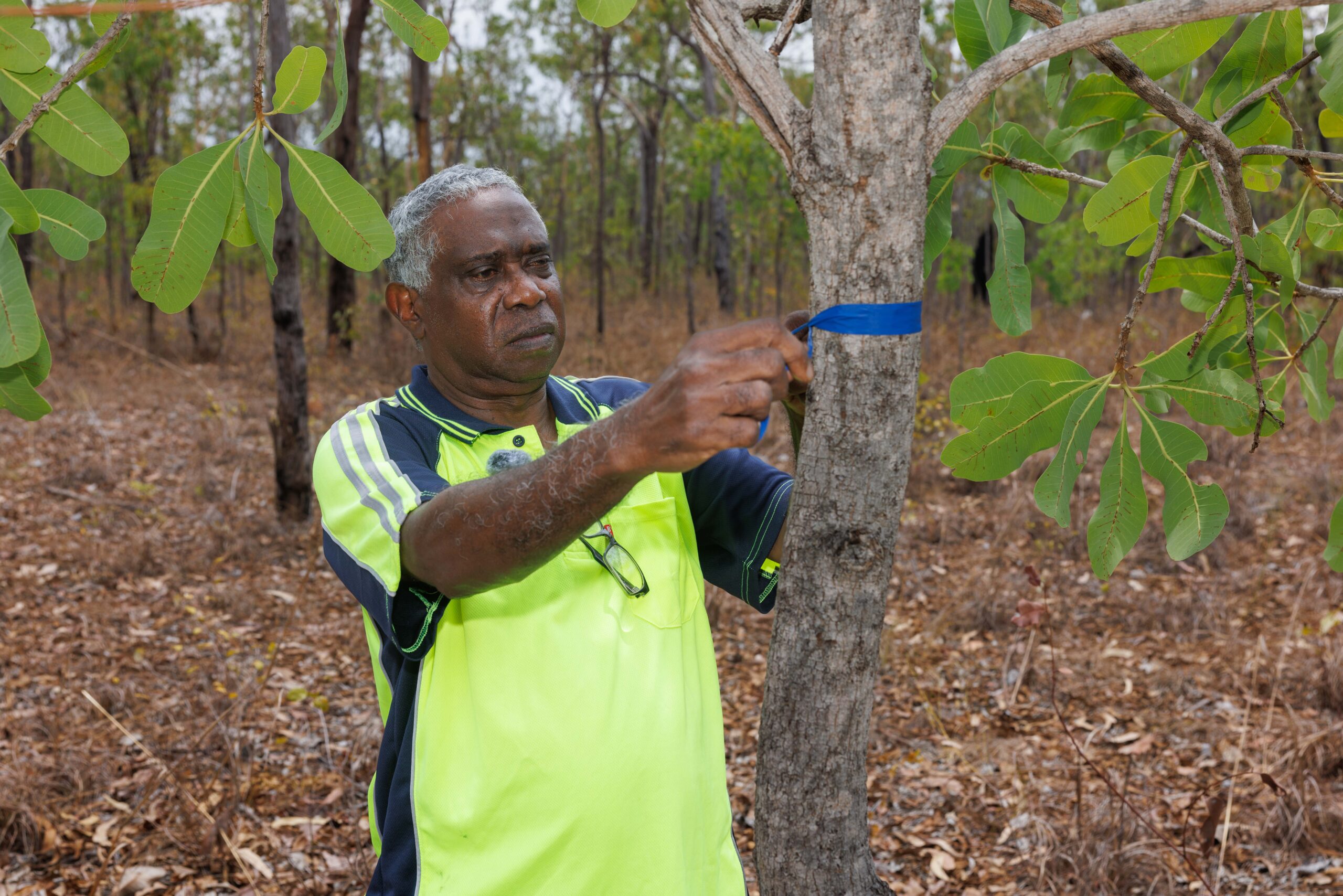
Victor Cooper on Country in Kakadu National Park. Photo: Michael Douglas.
The Indigenous-led research strategy, developed through a collaborative process between 2021 and 2025, is guided by Bininj/Mungguy leadership and sets out research priorities to better support Country, culture and park management.
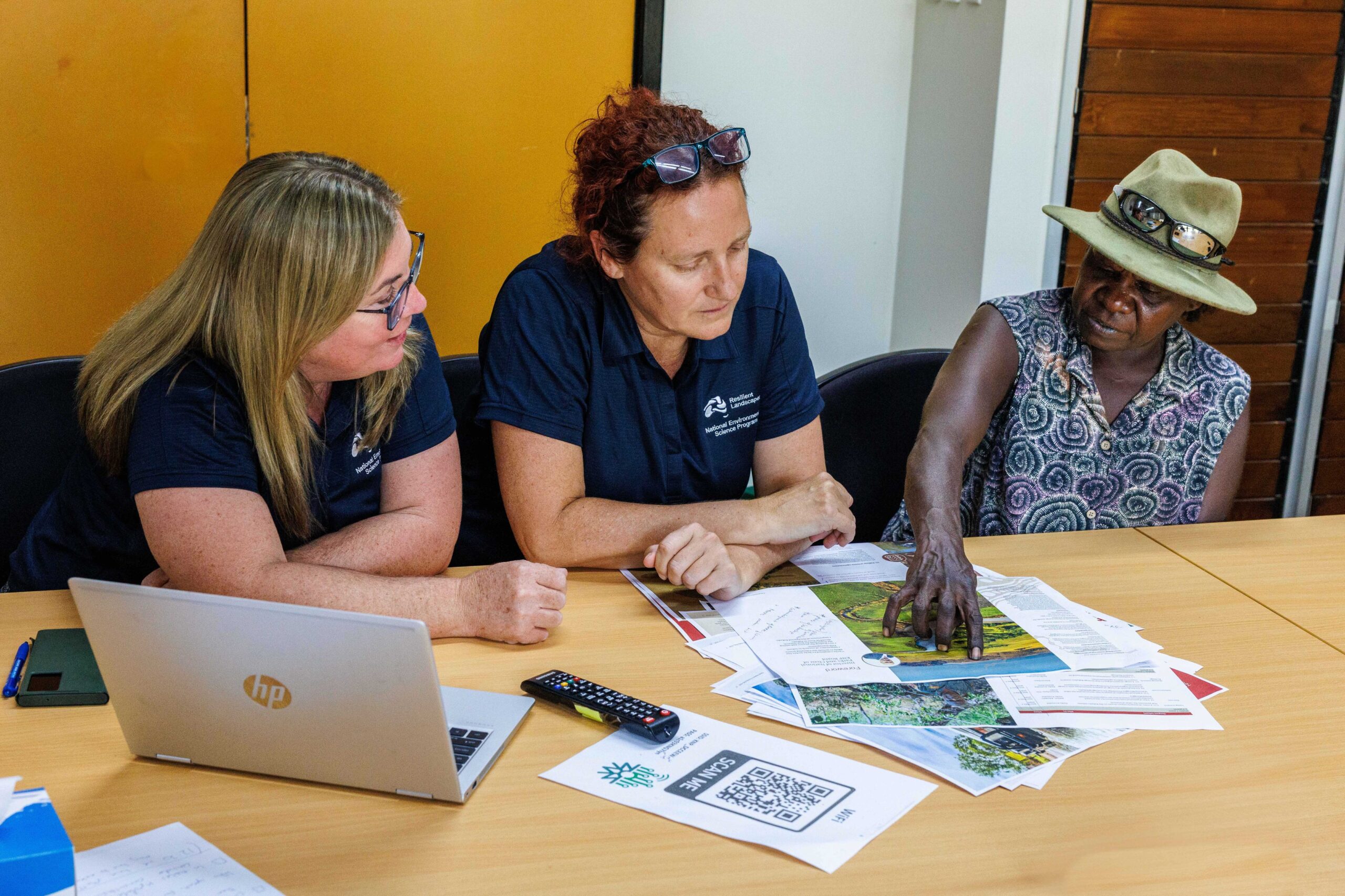
National Environmental Science Program Resilient Landscapes Hub project leaders Natalie Rossiter-Rachor, Rebecca Dobbs and Kakadu Traditional Owner Connie Nayinggul working on a draft of the Kakadu Research Strategy. Photo: Michael Douglas.
“Researchers can make a real difference by helping to secure funding to address the research questions Traditional Owners have as a priority and by supporting Indigenous leadership and employment in research projects,” Professor Douglas said.
The strategy is supported by the National Environmental Science Program Resilient Landscapes Hub, which is working to strengthen pathways for Indigenous-led research partnerships in Kakadu National Park.
In Australia, more than half (56%) of the national reserve system comprises either national parks jointly managed with Indigenous Traditional Owners or Indigenous Protected Areas (IPAs) where Traditional Owners are solely responsible for land management and on-ground conservation actions according to the Department of Climate Change, Energy, the Environment and Water.
The National Environmental Science Program Resilient Landscapes Hub is funded by the Australian Government to support research that strengthens the resilience and sustainability of Australia’s terrestrial and freshwater ecosystems.
Want to know more about the Resilient Landscapes Hub's activities and our research into practical solutions to environmental problems? Stay informed about activities, research, publications, events and more through the Hub newsletter.
"*" indicates required fields