24 September 2026
A remarkable discovery by Ngururrpa Rangers of a young night parrot at a nest on the Ngururrpa Indigenous Protected Area in the Great Sandy Desert has provided evidence of breeding and renewed hope for the future of one of Australia’s rarest birds.
The discovery was made during fieldwork undertaken by Ngururrpa Rangers as part of a long-term research partnership with the National Environmental Science Program Resilient Landscapes Hub and Indigenous Desert Alliance.
The project uses a two-way science approach bringing together Ngururrpa knowledge of Country with scientific research and technology to better understand where night parrots (Pezoporus occidentalis) occur, the habitats they depend on, and how threats to the species can be managed.
National Environmental Science Program project leader, Dr Rachel Paltridge, from Indigenous Desert Alliance said the research aims to build the knowledge needed to protect night parrots and their habitat.
“It’s a project that’s trying to understand where the night parrots are, how many there are, and how to best manage the threats,” Dr Paltridge said.
Central to the work is the knowledge and experience of Ngururrpa Rangers, who understand the waters, feeding areas, spinifex habitats (Triodia longiceps) called “lanu lanu” in Kukatja language, and other features of Ngururrpa Country.
“The Ngururrpa Rangers know where the best feeding habitats are, where the waters are, and where the good spinifex is, and we’ve used this knowledge to develop a habitat model to help find night parrots,” Dr Paltridge said.
The habitat model is helping guide where Rangers deploy song meters (acoustic recorders) to record night parrot calls, identify waterholes for trial environmental DNA (eDNA) sampling, and target feral cat management.
Ngururrpa Ranger Clifford Sunfly has been working with Dr Paltridge on the National Environmental Science Program project for more than five years.
“Once we do find any water spots around Ngururrpa, we use the eDNA to see if the night parrots are going there to have a drink, and then we’ll try and protect that area for them,” Clifford said.
An innovative species-specific eDNA test provides another tool for detecting night parrots. Ngururrpa Rangers worked with NatureDNA Director – Science and Research, Dr Elise Furlan, to develop and field-test the method, which recently produced positive detections at a rockhole.
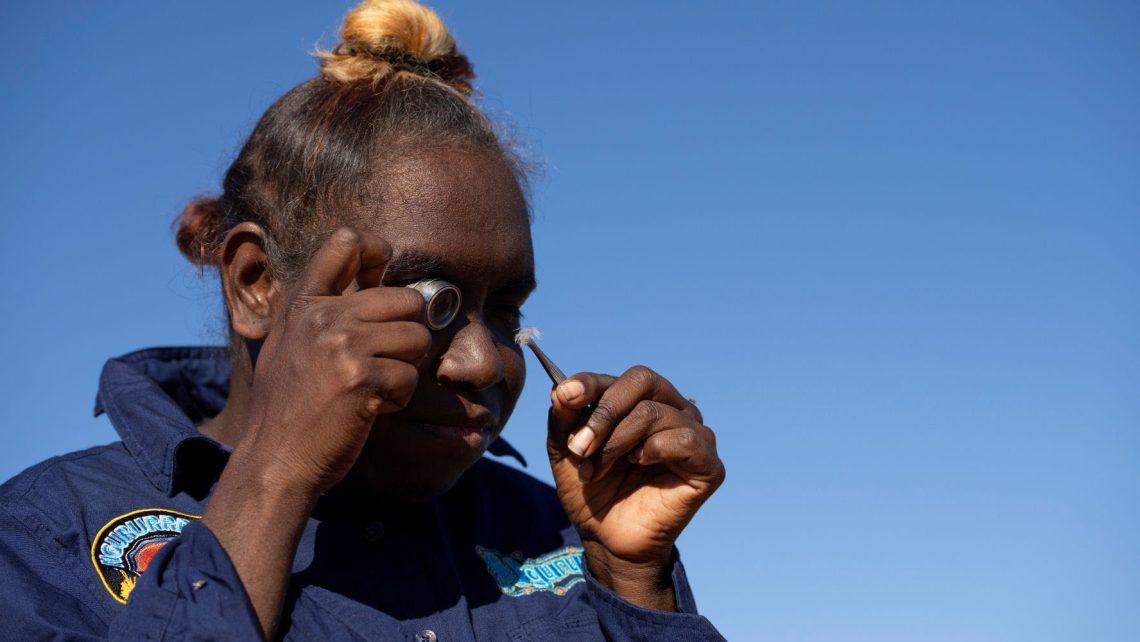
Ngururrpa Ranger Lucinda Gibson examines a night parrot feather she found. (Photo: Salty Davenport)
Ngururrpa Rangers have previously recorded night parrot calls at multiple locations on Ngururrpa Country and captured images using remote cameras. Until now, they had never encountered a night parrot within its spinifex nesting habitat.
That changed when Ngururrpa Rangers Lucinda Gibson and Kathryn Njamme, searching thick spinifex following heavy rain, made an extraordinary discovery: a young night parrot perched in the spinifex above its nest.
The bird was fully grown, and close to fledging.
“We are just so happy to find a night parrot,” Lucinda said.
For Kathryn, the discovery was the culmination of years of persistence.
“I’m just so happy that we have found this night parrot after five years of searching, so we can show it to the world that the Ngururrpa Rangers found it,” Kathryn said.
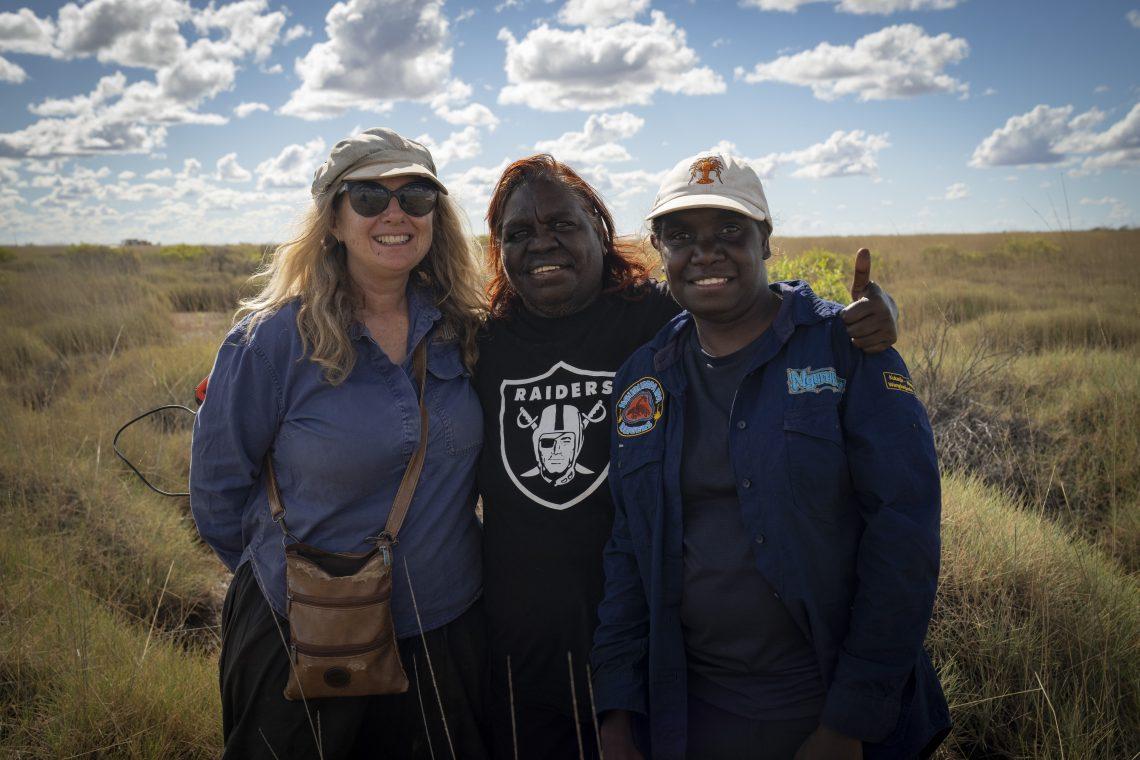
Rachel Paltridge, Kathryn Njamme and Lucinda Gibson after finding a night parrot. (Photo: Salty Davenport)
The discovery was immediately followed by practical action to protect the bird and its habitat. Rangers deployed a Felixer™ predator-control device near the nesting area to reduce the threat from feral cats and undertook controlled burning in adjacent areas to protect the nesting habitat from damaging wildfire.
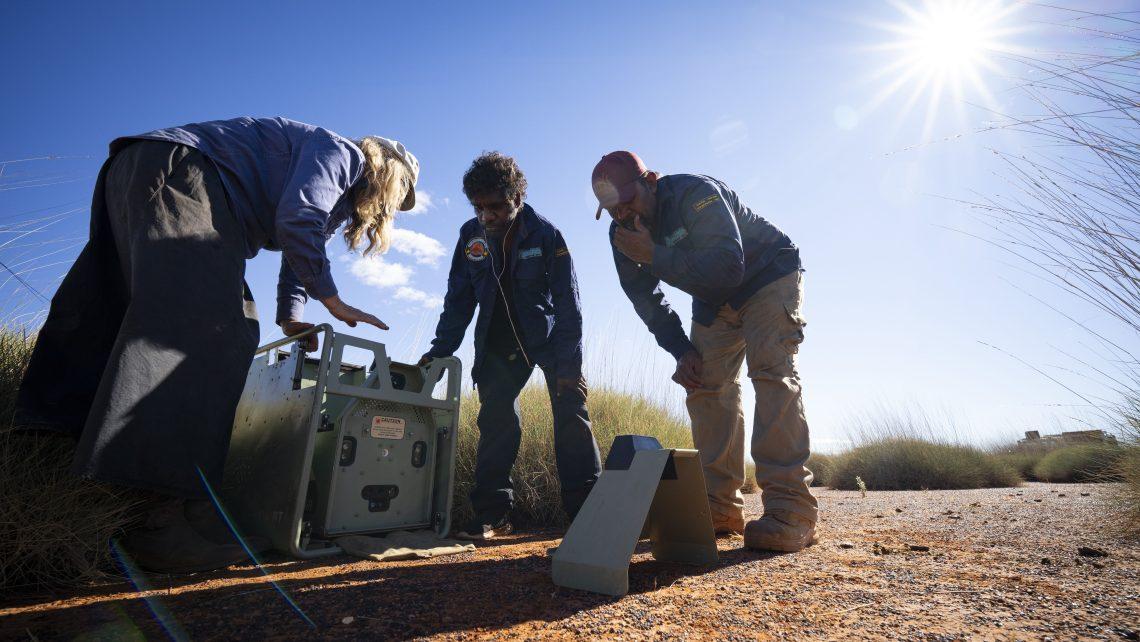
Rachel Paltridge, Clifford Sunfly and Jacob Bradshaw checking a FelixerTM predator control device that shoots poisoned gel at cats. (Photo: Salty Davenport)
The find demonstrates the importance of long-term, Indigenous-led management of Country, supported by research partnerships that respect and combine different knowledge systems.
For Ngururrpa Rangers, protecting the night parrot is not a stand-alone conservation activity. It forms part of their broader responsibility to care for Ngururrpa Country – its animals, plants, waters, cultural places, and knowledge – for current and future generations.
The Ngururrpa Indigenous Protected Area provides nationally significant habitat for the critically endangered night parrot. It supports the world’s largest population of night parrots with previous results suggesting approximately 50 birds may occur in the area, potentially making Ngururrpa Country one of the species most important strongholds.
The night parrot is identified as a priority species under the Australian Government’s Threatened Species Action Plan 2022-2032.
Results from the National Environmental Science Program research project are expected to be published in 2027 and will contribute to understanding and protecting night parrots in Ngururrpa Country and more broadly.
Link to ABC story: Rare video of night parrot chick hiding in spinifex tunnel in WA desert
Want to know more about the Resilient Landscapes Hub's activities and our research into practical solutions to environmental problems? Stay informed about activities, research, publications, events and more through the Hub newsletter.
"*" indicates required fields