Connie Nayinggul
Project co-lead
Kakadu Board of Management
20 December 2025
The Resilient Landscapes Hub’s impact on the research sector extends beyond individual project outputs. Through ongoing and proactive engagement by the hub’s Indigenous facilitation team, this work has helped drive systemic change within research institutions and strengthen recognition of Indigenous leadership, knowledge sovereignty and culturally appropriate research processes.
Many Indigenous communities have long-standing concerns about the ethics processes used to approve research that involves their communities. During consultation with The University of Western Australia (UWA), Indigenous people expressed that standard human ethics processes often felt ‘paternalistic and offensive’, particularly for Indigenous-led projects.
To address these concerns, UWA has adopted NESP’s Three Category Approach as a fundamental component of their new Step One Indigenous Ethics process. The NESP framework provides clear distinctions between Indigenous-led research, co-designed projects, and research that affects Indigenous communities without direct engagement.
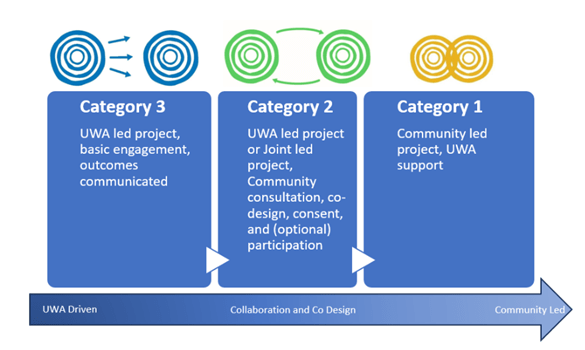
The Three Category Approach. Graphic: UWA.
Dr Carina Marshall, UWA’s Associate Director, Research Ethics and Integrity, said that the clarity and nuance provided by the Resilient Landscape Hub during their consultations helped them to recognise the critical distinctions between the different types of research engagement with Indigenous communities.
Of particular importance is the recognition that Indigenous-led research (Category 1) may require exemption from standard Human Research Ethics Committee processes when community ethics approval exists.
‘This exemption respects Indigenous authority and acknowledges that Indigenous communities have ethical frameworks that may be more appropriate for the specific cultural context of the research. The hub’s Indigenous facilitation team has been critical to the increasing recognition of the value of the approach in other institutions. Their willingness to share their expertise and experiences has empowered us to develop processes that honour Indigenous leadership and knowledge sovereignty while providing clear guidance for our research community’.
Expedition leader Dr Carina Marshall, UWA Associate Director, Research Ethics and Integrity
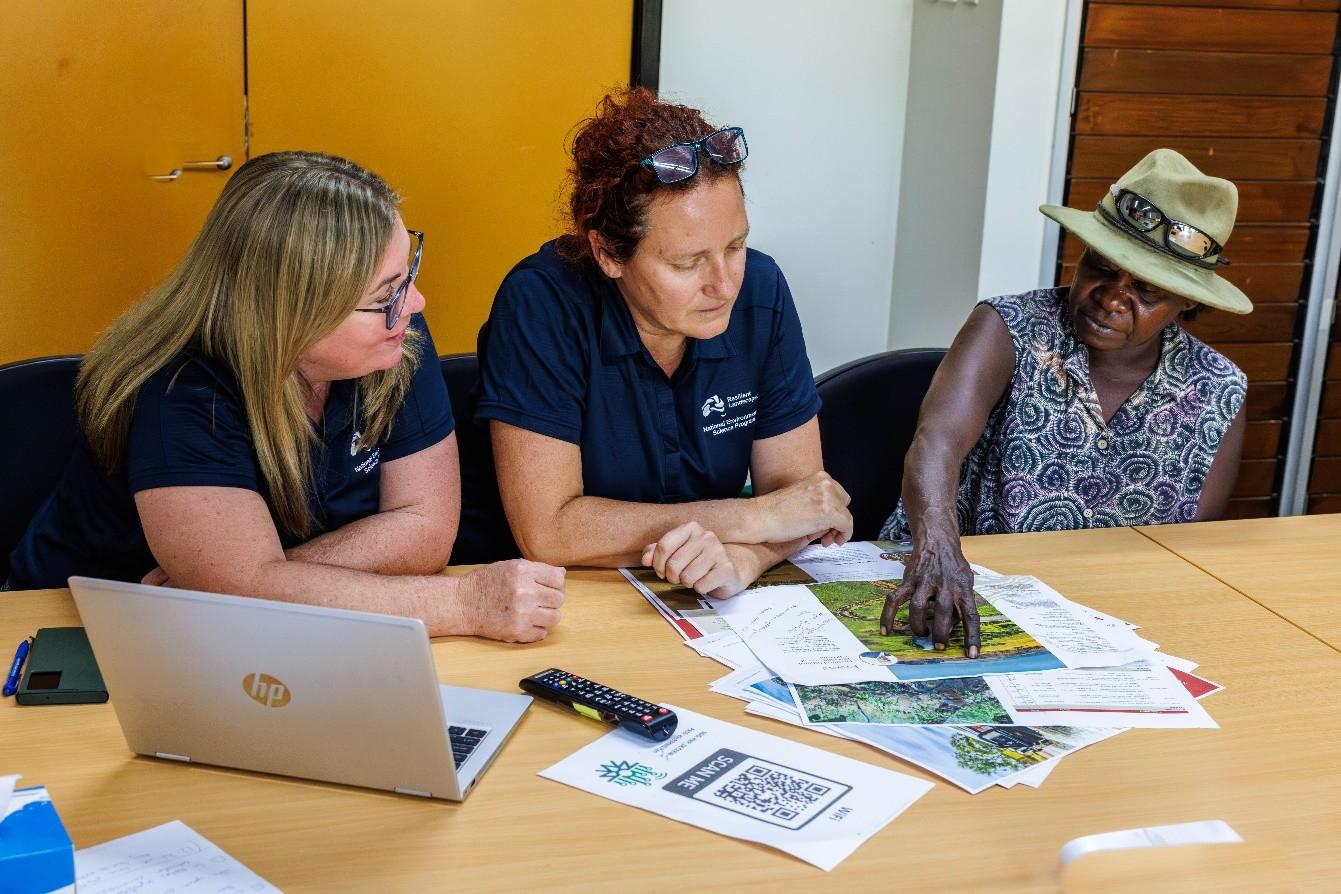
Natalie Rossiter-Rachor (Charles Darwin University, NESP Project leader), Rebecca Dobbs (The University of Western Australia, NESP Project leader) and Connie Nayinggul, (Kakadu Traditional Owner and NESP Project leader) working on a draft of the Kakadu Research Strategy. Photo courtesy: Michael Douglas.
Researchers benefit from having clearer guidelines tailored to the different types of research engagement they may have with Indigenous communities. The approach additionally reduces institutional risk of breaching the AIATSIS Code or being found complicit in research misconduct, while encouraging sustainable relationships with Indigenous communities that can facilitate ongoing collaborations.
Project co-lead
Kakadu Board of Management
Hub Leader
The University of Western Australia
Project co-lead
Kakadu Board of Management
Want to know more about the Resilient Landscapes Hub's activities and our research into practical solutions to environmental problems? Stay informed about activities, research, publications, events and more through the Hub newsletter.
"*" indicates required fields