1 June 2026
A new study published in Fire Ecology has assessed whether recent fire management in Kakadu National Park is achieving its intended goals, finding that while some fire regime targets have been met, others have not. Meanwhile, the ecological outcomes for biodiversity remain unclear.
Supported by the National Environmental Science Program (NESP) Resilient Landscapes Hub, the research evaluated fire management outcomes in Kakadu following the implementation of the Kakadu National Park Management Plan 2016–2026. The study tested whether management had reduced the area and frequency of large, severe fires, reduced fire patch size, and increased the number and extent of long unburnt vegetation patches.
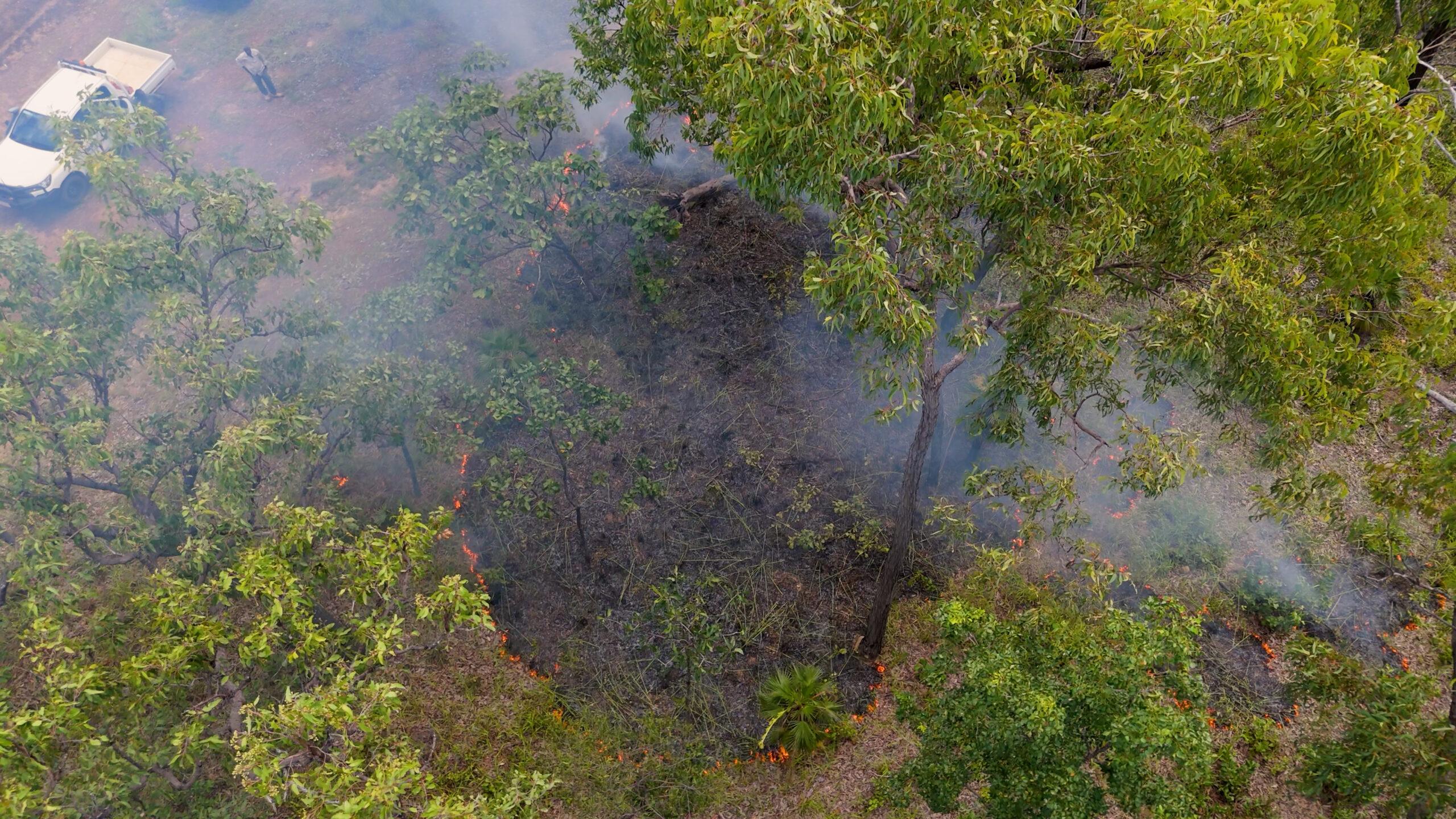
Wet-season burning in Kakadu National Park. Photo: Alex Asbury, NESP Resilient Landscapes Hub.
The researchers found that outcomes differed across Kakadu’s three major landforms – lowland, floodplain and escarpment. In the lowland, where most fire management occurs, total burnt area and the frequency of later year fires declined under contemporary management, while late dry season fire patch size also reduced over time. Fire frequency also reduced on the floodplain and escarpment, with a clear shift toward more early year burning.
Lead author Dr Mitchell Cowan said the study shows the value of testing whether management efforts are delivering on the goals they set out to achieve.
“Fire management in Kakadu has clearly shifted some aspects of the fire regime, particularly in the lowlands where most active fire management occurs,” Dr Cowan said. “However, changing fire patterns is only part of the story. We still need to better understand what those changes mean for plants, animals and habitats, so future management can be guided by clear ecological outcomes.”
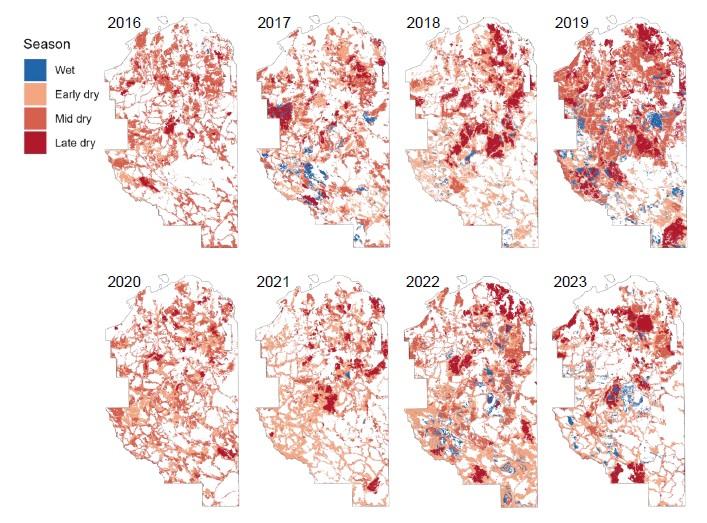
Seasonal extent of fires in Kakadu National Park each year during the contemporary management period from 2016 to 2023, showing areas burnt in the wet, early dry, mid dry and late dry seasons. Image: Fire Ecology.
Seasonal extent of fires in Kakadu National Park each year during the contemporary management period from 2016 to 2023, showing areas burnt in the wet, early dry, mid dry and late dry seasons. Image: Fire Ecology.
The study also found that the number of extreme fires decreased in the lowland and escarpment. However, large fires still made up most of the area burnt across Kakadu. The number of long unburnt patches increased in all areas, but their total area only increased on the floodplain.
The findings point to an important next step for fire management in Kakadu and other protected areas: linking fire management targets more directly to ecological outcomes. The authors say future fire management should be supported by clear, measurable objectives and stronger ecological monitoring so park managers can better understand which fire regimes are delivering the greatest benefits for biodiversity.
This research forms part of the NESP Resilient Landscapes Hub’s work to improve fire management in northern Australia.
The National Environmental Science Program Resilient Landscapes Hub is funded by the Australian Government to support research that strengthens the resilience and sustainability of Australia’s terrestrial and freshwater ecosystems. The style and structure of this draft were based on the attached example news story.
Want to know more about the Resilient Landscapes Hub's activities and our research into practical solutions to environmental problems? Stay informed about activities, research, publications, events and more through the Hub newsletter.
"*" indicates required fields