16 July 2025
Analysis of long-term data shows that Tjakuṟa – the great desert skink – prefers to live in long-unburnt habitat.
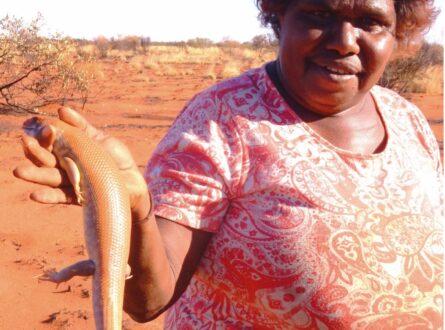
Tjakuṟa (Liopholis kintorei) is found in sandy spinifex country across the western and central deserts of Australia. The large, orange lizard is of cultural significance to Aboriginal people in these regions. Several conservation groups, including Indigenous Rangers, have monitored tjakuṟa numbers for the past two decades owing to concerns that their numbers are declining.
In a recent paper, researchers from the NESP Resilient Landscapes Hub analysed 23 years of data on tjakuṟa burrows (from 2002 to 2023) collected from Yulara, Uluṟu–Kata Tjuṯa National Park and Newhaven Wildlife Sanctuary in the Northern Territory, and Kiwirrkurra Indigenous Protected Area in Western Australia. They assessed how rainfall, vegetation health, time since fire and fire extent affected the number of burrows actively used by tjakuṟa in each area.
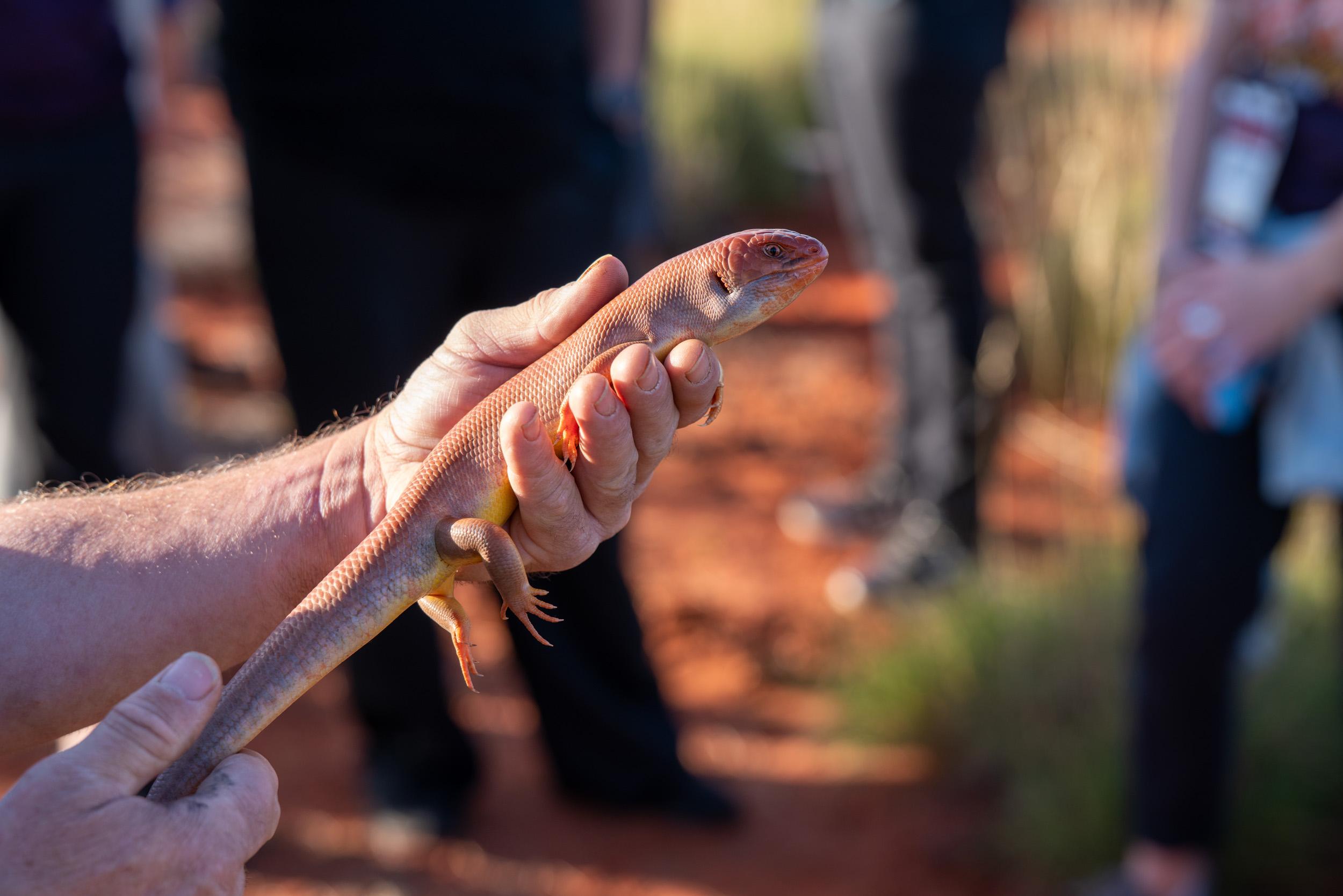
Tjakuṟa live in a system of communal family burrows and share a latrine area. The latrines are distinctive, which allows surveyors to distinguish tjakuṟa burrows from those of other animals. A burrow is recorded as ‘active’ (in use) when observers see fresh tjakuṟa tracks around it and the scats in the latrine are fresh.
The analysis found that time since fire was positively associated with the number of active burrows in an area. At Newhaven, for example, 84% of the burrows found in long-unburnt spinifex were active. In contrast, only 8% of burrows found in habitat burnt in the past two years were active. Large fires also led to fewer active burrows in an area.
‘Our result demonstrates that we can improve the persistence of Tjakuṟa populations through ongoing and targeted fire management programs,’ said lead author Dr Darren Southwell, of the NESP Resilient Landscapes Hub and the University of Newcastle.
Tjakuṟa burrows are distinctive not only to humans searching for them. When fires remove dense spinifex vegetation the burrows become more obvious and accessible to feral cats and red foxes, who take advantage of the lizard’s predictable schedule of emerging from their burrow at sunrise and sunset.
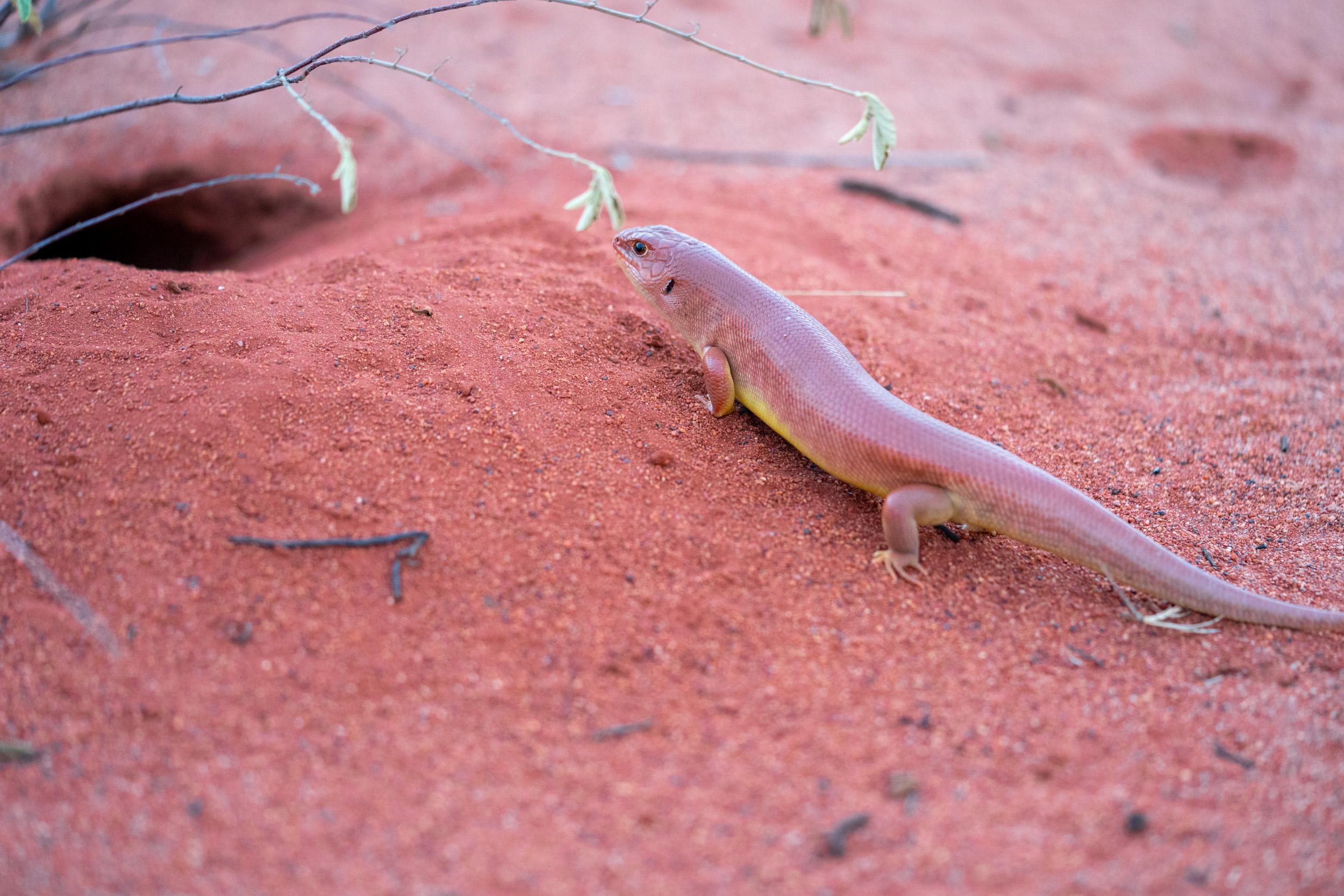
In promising news for Tjakuṟa, the researchers found that the number of active burrows was increasing in the regions where fire was either actively managed around Tjakuṟa burrows or could be quickly suppressed. They recommend that land managers avoid burning vegetation directly around tjakuṟa burrow systems, while conducting ongoing burns in adjacent areas to maintain spinifex vegetation at a variety of ages. Careful fire management combined with predator control will benefit tjakuṟa and many other species in arid Australia.
‘The next step for our research is to learn more about how fire management and predator control might interact with one another to impact Tjakura populations,’ Dr Southwell said.
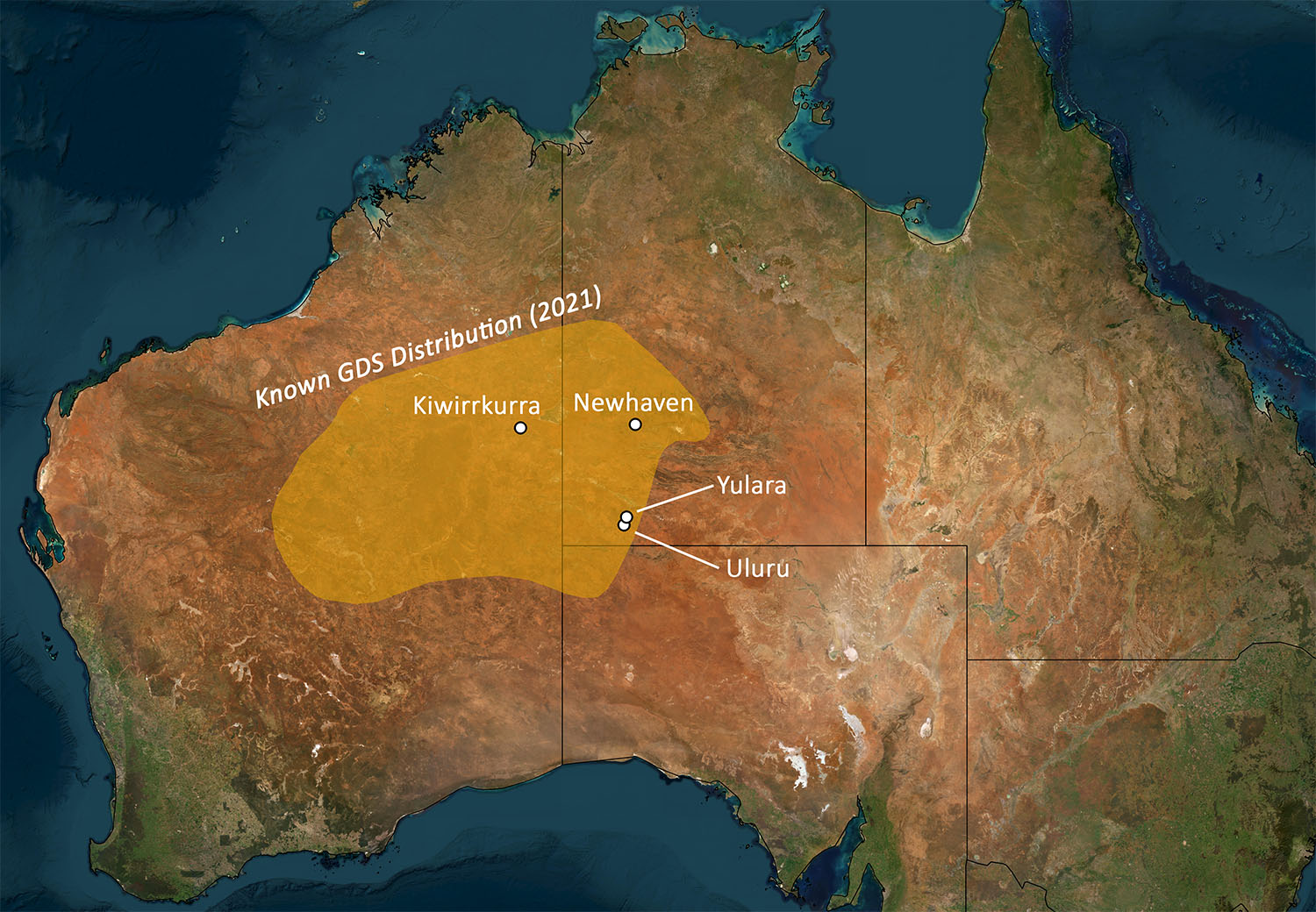
Map courtesy of the Indigenous Desert Alliance
Want to know more about the Resilient Landscapes Hub's activities and our research into practical solutions to environmental problems? Stay informed about activities, research, publications, events and more through the Hub newsletter.
"*" indicates required fields