Brendan Mackey
Key Researcher
Griffith University

20 December 2025
The subtropical forests of south-east Queensland and northern New South Wales encompass the globally significant Gondwana rainforest and expanses of tall eucalypt forest that retain outstanding biological diversity. The forests support many threatened plant and animal species, including an estimated 20% of the wild koalas left in New South Wales.
The region and its forests are facing significant threats from climate change, with bushfires and floods in 2018, the Black Summer fires in 2019–20, floods in 2022, bushfires in 2023 and 2024, and Cyclone Alfred in 2025. The spread of myrtle rust, a disease that affects trees and shrubs in the Myrtaceae family of plants, also poses significant threats to the health of forests in the region.
Hub researchers are working with Indigenous organisations, community groups and local government in the Northern Rivers region to design climate adaptation plans that can be embedded into local planning and conservation initiatives for threatened or culturally significant species. Researchers are also investigating how landscape characteristics can help to predict a forest’s susceptibility to myrtle rust, along with contributing to training Indigenous rangers to monitor the disease and develop management strategies.
Hub researchers working to improve the resilience of landscapes to climate change in the Northern Rivers region have digitally mapped the location and extent of camphor laurel (Cinnamomum camphora) trees, which are a serious environmental weed in the region.
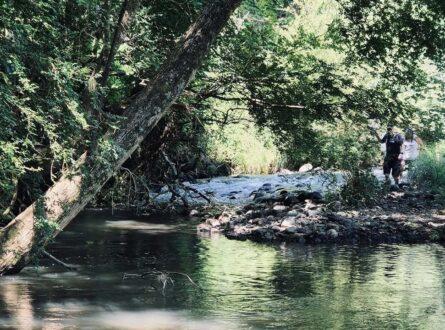
Camphor laurel trees tend to form a monoculture that replaces native vegetation, especially on fertile floodplains. Their shallow root systems can destabilise riverbanks, such that large-scale removal of trees needs to be carefully planned to avoid environmental damage to river systems.
The mapping data on camphor laurel is now being used by the Tweed Shire Council and Tweed Landcare to plan their control activities.
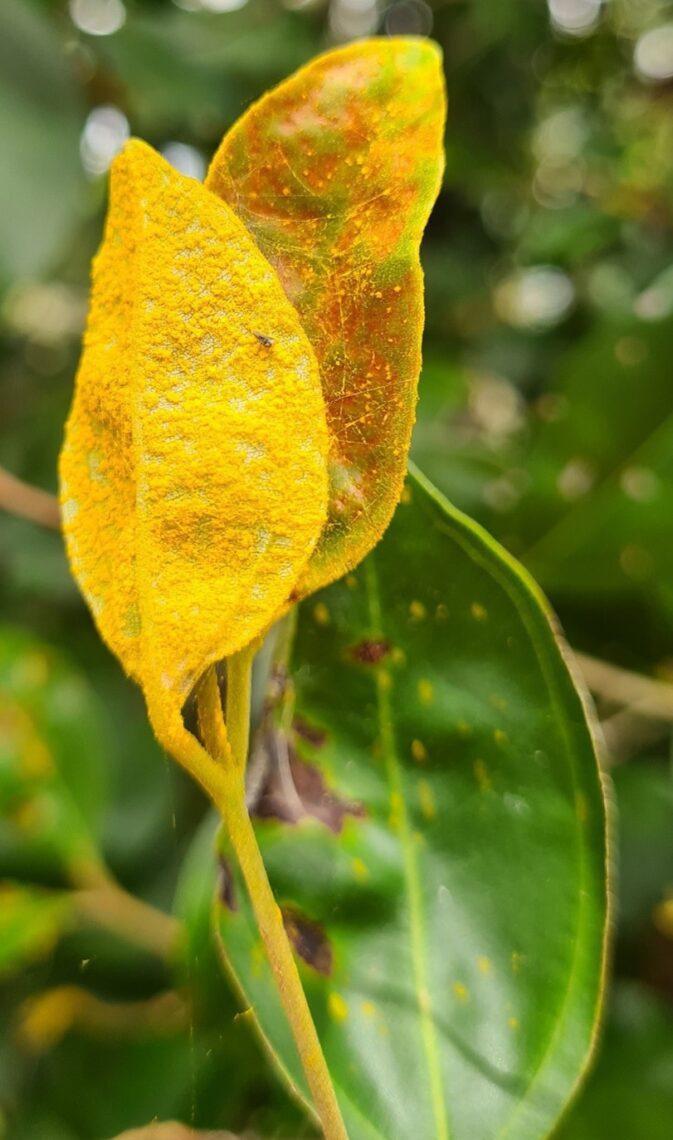
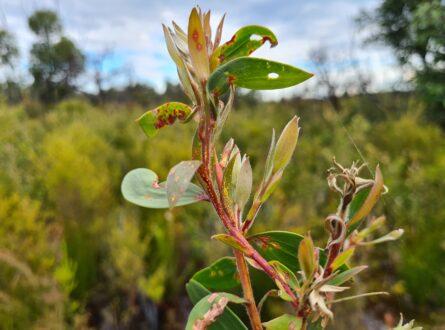
Myrtaceae species with myrtle rust. Photo: Geoff Pegg.
The Hub’s myrtle rust research team is investigating if current land tenure or historic land clearing influences the impact of the disease in wet eucalypt forests in south-east Queensland and Northern New South Wales.
Myrtle rust is caused by the fungal pathogen Austropuccinia psidii and was first detected in Australia in 2010. The research team has surveyed sites within national parks, on privately-owned land and on council-owned land.
Early findings suggest that historic land clearing, not existing land tenure, correlates with the presence of understorey rainforest species most susceptible to myrtle rust and that the presence of these susceptible species increases a forest’s vulnerability to the disease. The research is among the first to understand the impacts of myrtle rust at the forest-community level. This new knowledge will help to prioritise which forest areas to conserve, manage and restore in relation to the disease.
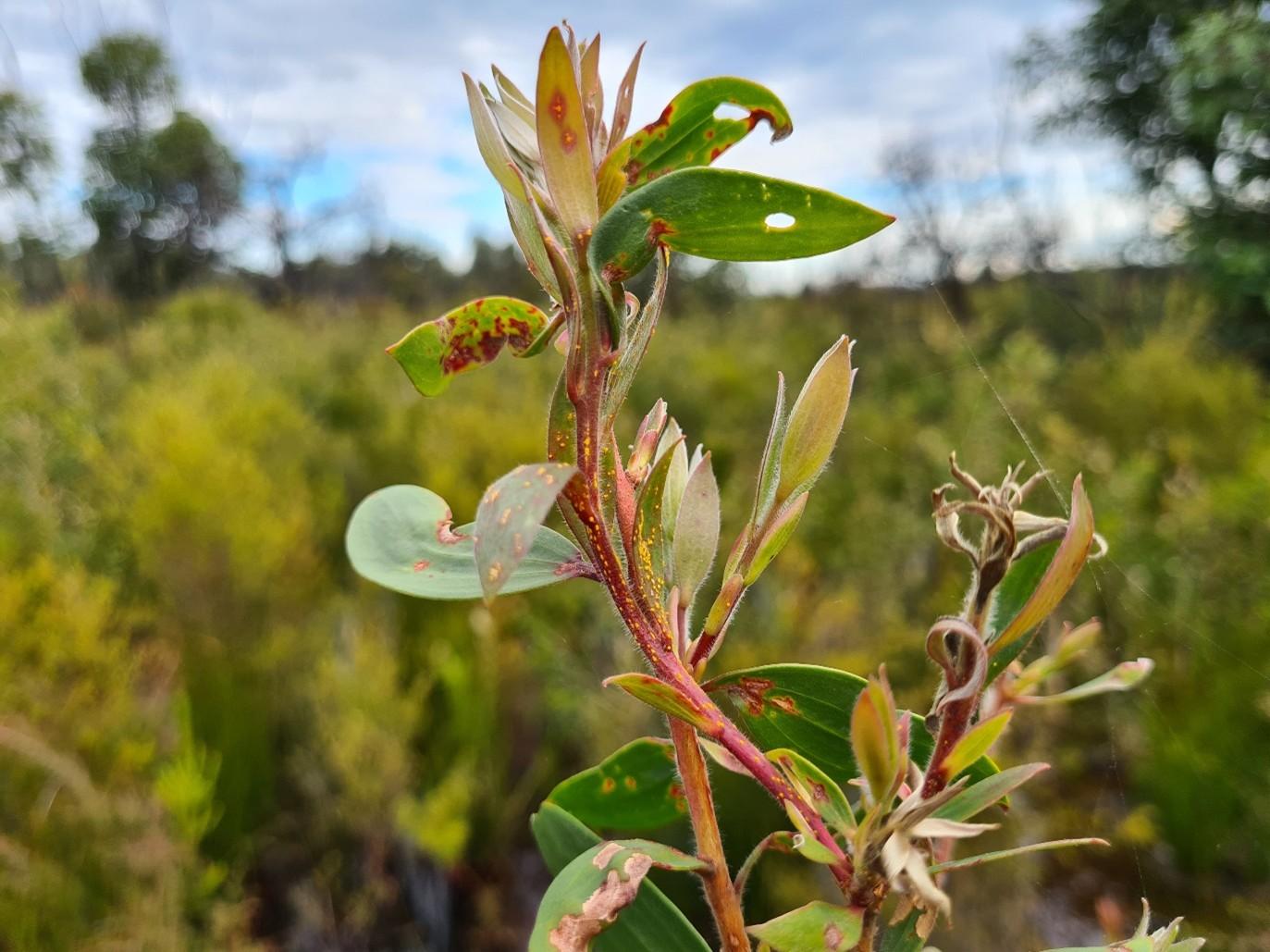
Melaleuca quinquenervia with myrtle rust. Photo: Geoff Pegg.
The research team has presented the results to the Manaaki Whenua Landcare Research’s Beyond Myrtle Rust webinar series (October 2024), the 14th Australasian Plant Conservation Conference (October 2024), and Rainforest Connections Conference in Ballina, NSW (June 2024).
To hear more about myrtle rust, watch Dr Kristy Stevenson’s (Queensland University of Technology) webinar presentation here.
Research Executive Committee and Northern Node Leader
James Cook University
Senior Research Assistant
Griffith University
Research Executive Committee and Key Researcher
Queensland University of Technology
Key Researcher
Qld Department of Agriculture and Fisheries
Want to know more about the Resilient Landscapes Hub's activities and our research into practical solutions to environmental problems? Stay informed about activities, research, publications, events and more through the Hub newsletter.
"*" indicates required fields