6 March 2026
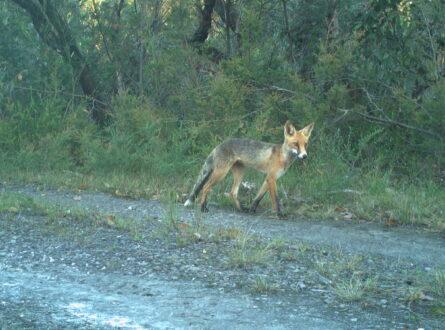
Seventy camera traps have been installed in security posts across Booderee National Park in the next phase of a plan to detect the remaining foxes.
In June 2025, eight researchers, rangers and national park staff established the cameras across the park, at the same time as trapping foxes to fit GPS telemetry collars to better understand fox movements and behaviour.
“The 70 camera traps are strategically placed to cover the entire park and will remain in place permanently to increase efforts to monitor and manage fox activity,” National Environmental Science Program (NESP) Resilient Landscapes Hub Project Leader Dr Paul Meek from the New South Wales Department of Primary Industry and Regional Development said.
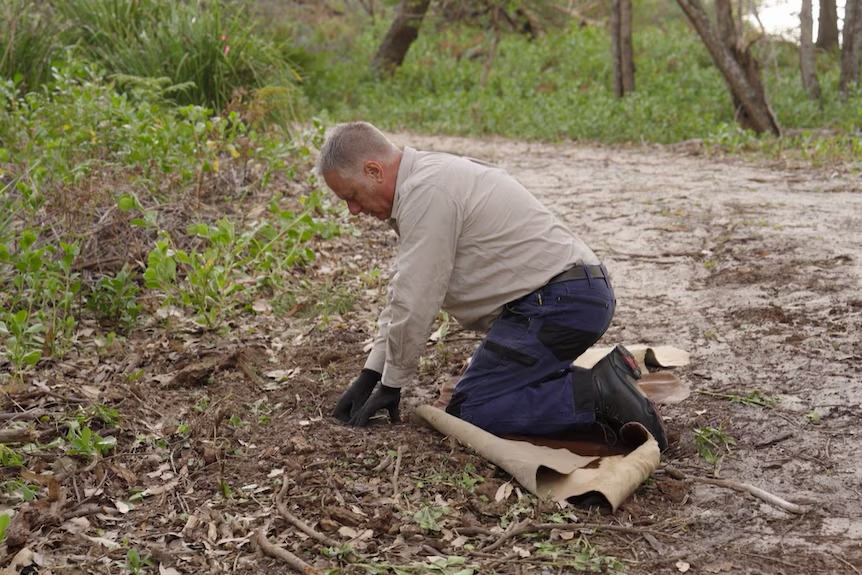
Dr Paul Meek checks a fox trap during fieldwork in Booderee National Park (Photo: NESP).
“We are using cameras, in conjunction with the GPS collars, to improve our ability to detect the entry of foxes which were not previously recorded in the area and improve our knowledge of the local ecology and how foxes use the landscape,” Dr Meek said. “This will help park managers and local Traditional Owners develop tailored management interventions for the park and apply best-practice fox management into the long-term future.”
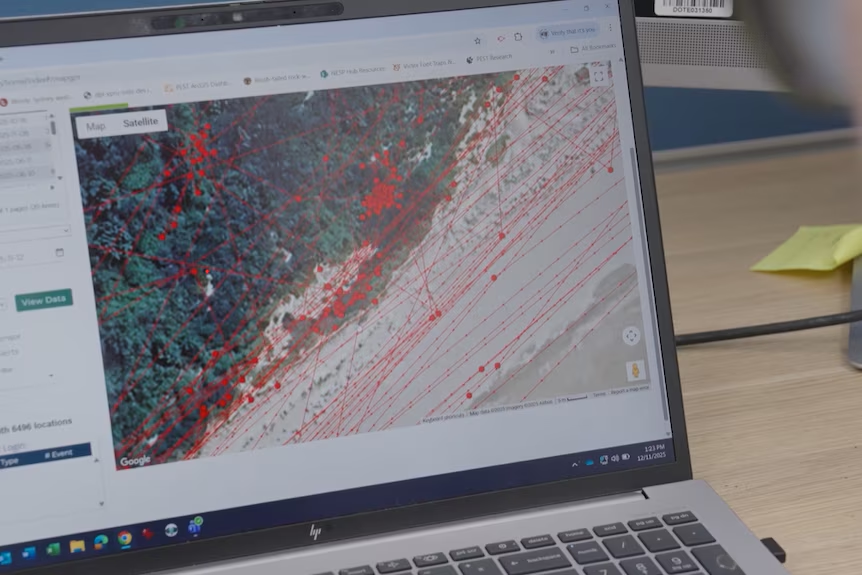
More than six foxes with GPS collars are creating “incredible” data highlighting how they are using the landscape (Photo: NESP).
Booderee National Park has been working to control foxes in the park for 25 years, and it’s hoped the new camera monitoring array will improve fox detection and subsequently improve fox control to protect reintroduced and existing species. These include Southern brown bandicoots and the Eastern quoll – a priority species under the Australian Government’s Threatened species action plan 2022–2032.
“This project builds on the fox control and monitoring program that has successfully reduced fox numbers and enhanced biodiversity conservation in the park,” Booderee National Park Natural Resource Manager Dr Nicholas Dexter said. “Ongoing management is crucial to ensure that the natural values of Booderee are conserved into the future.”
This new project to improve fox control efforts is part of a broader project led by the NESP Resilient Landscapes Hub and Booderee National Park – with support from the Wreck Bay Aboriginal Community Council’s Bherwerre Rangers. Additional support has come from the New South Wales National Parks and Wildlife Service, Jerrinja Land Council, Jerrinja Rangers, Local Land Services, and Shoalhaven City Council.
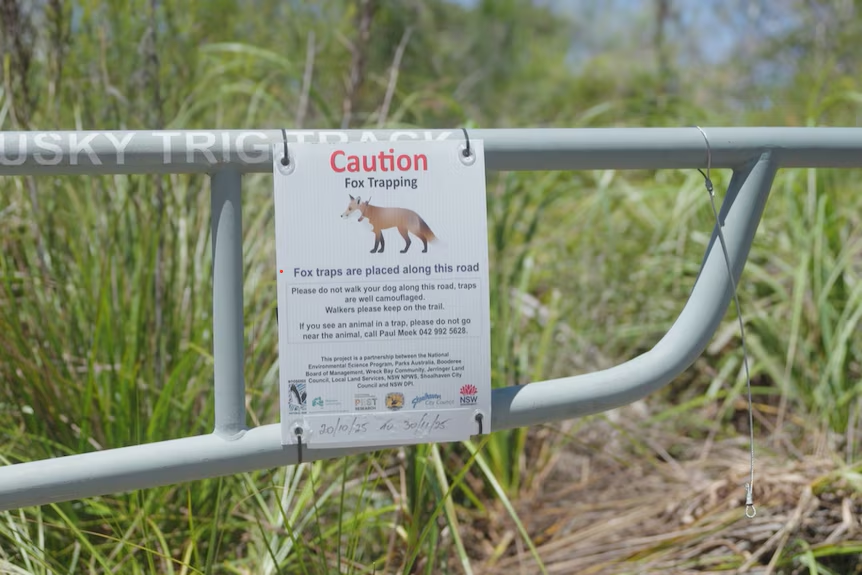
More than six foxes have been trapped and fitted with a GPS collar so far (Photo: NESP).
About Booderee National Park
Booderee National Park (BNP) covers 6,400 ha of the Bherwerre Peninsula in south-eastern Australia. BNP, previously named the Jervis Bay National Park, is on Wreck Bay Aboriginal Community Council land, and since 1995, it has been jointly managed with the Australian Government (Parks Australia).
BNP supports numerous threatened fauna, including the eastern bristlebird (Dasyornis brachypterus), eastern chestnut mouse (Pseudomys gracilicaudatus), and eastern pygmy possum (Cercartetus nanus). The once abundant greater glider (Petauroides volans) has not been detected since 2006 and is now thought eradicated from BNP. The common ringtail possum (Pseudocheirus peregrinus), previously thought eradicated from BNP in 2014, has recently been detected in 2023 and 2024. Once abundant large forest owls including the powerful owl (Ninox strenua), masked owl (Tyto novaehollandiae) and sooty owl (Tyto tenebricosa), are now rare in BNP. Reintroduction programs have seen the release of long-nosed potoroo (Potorous tridactylus), southern brown bandicoot (Isoodon obesulus) and eastern quoll (Dasyurus viverrinus).
Read the ABC news story: GPS collars, camera traps to see if foxes are swimming into Booderee National Park
Want to know more about the Resilient Landscapes Hub's activities and our research into practical solutions to environmental problems? Stay informed about activities, research, publications, events and more through the Hub newsletter.
"*" indicates required fields