9 March 2026
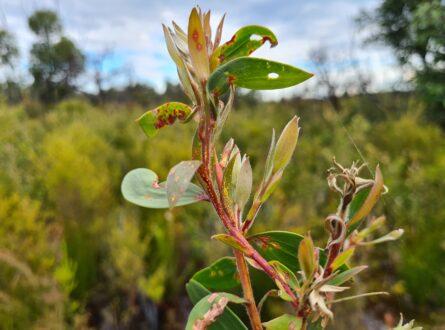
New research has revealed that past land clearing is increasing the vulnerability of native Australian forests to the invasive myrtle rust disease — with regrowth forests emerging as hotspots for impact.
In a study published today in the journal Ecological Solutions and Evidence, researchers surveyed 21 patches of eucalypt rainforest (wet sclerophyll forest) across Queensland and northern New South Wales. The site species included the small bushy native rainforest Myrtaceae (the myrtle family), that are susceptible to myrtle rust.
Among the national park, council and privately owned land examined were areas that had been subject to different levels of historical land clearing (i.e., level of canopy cover in the 1960’s).
Led by Dr Kristy Stevenson and Professor Jennifer Firn at Queensland University of Technology (QUT), the National Environmental Science Program Resilient Landscape Hub study found that this type of forest with a history of heavier land clearing was more impacted by myrtle rust.
“Regrowth forests tend to have higher densities of species that are highly susceptible to myrtle rust, particularly a small tree called rose myrtle (Archirhodomyrtus beckleri),” Dr Stevenson explained. “Native rose myrtle can rapidly recover and dominate an area after land clearing. However, its abundance is also associated with more severe myrtle rust damage at those sites.”
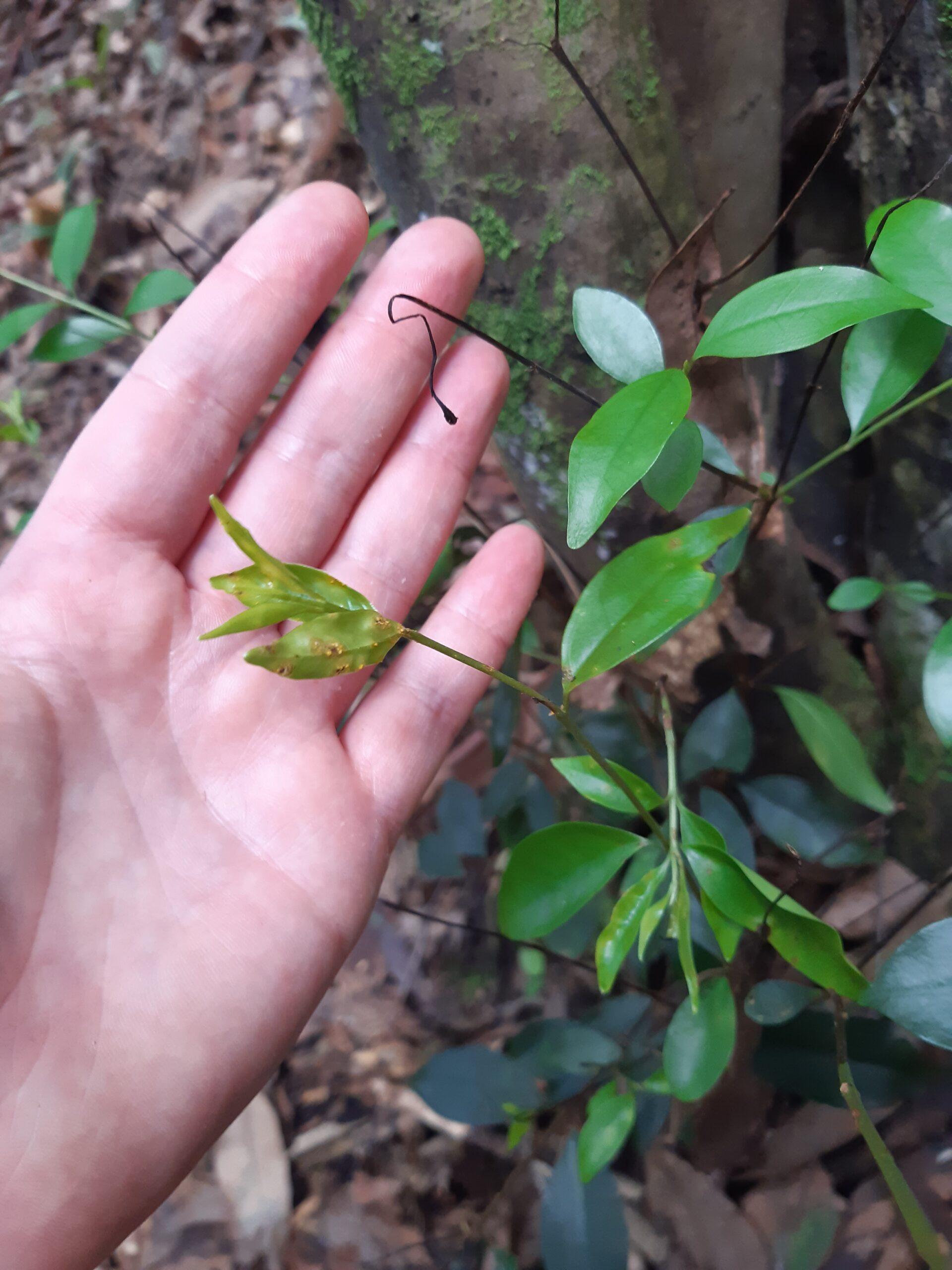
Rose Myrtle impacted by myrtle rust where the main stem has died and the basal re-sprouts are infected. Photo: Kristy Stevenson
“Our results show that historical land-use leaves a biological legacy that can shape disease risk decades later,” Dr Stevenson said. “It’s not just where the pathogen can go — it’s where the most vulnerable hosts are concentrated.”
Professor Firn added the findings have important implications for forest management and conservation planning.
“Regrowth forests may need closer monitoring for both myrtle rust damage and weed invasion, while less disturbed areas could act as important refuges for healthier individuals of threatened species, with value for long-term conservation and potential plant breeding,” Professor Firn said.
“Mapping clearing history alongside forest age could help managers target surveillance and management where disease risk is highest.”
Myrtle rust is caused by the highly destructive fungal pathogen Austropuccinia psidii. Native to south America, it was first detected in Australia in 2010 and has since spread rapidly. It is a wind-dispersed disease threatening a wide range of native eucalypts, tea trees and bottle brushes. As its spores travel easily across landscapes, understanding where susceptible plants occur is critical to slowing its spread and damage.
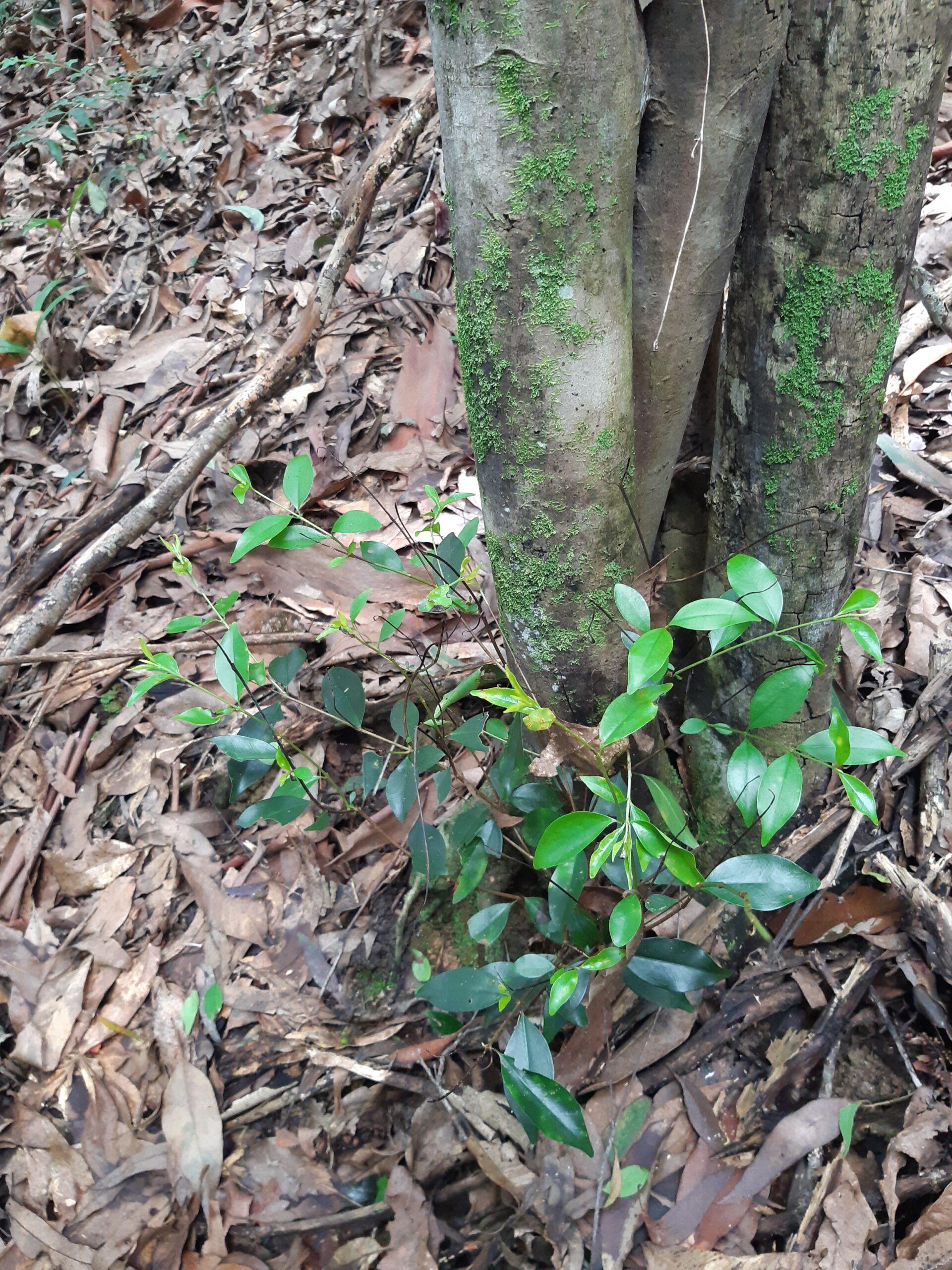
Rose Myrtle at eucalypt rainforest study site at Luxton bush reserve in Queensland. Photo: Kristy Stevenson
The National Environmental Science Program Resilient Landscapes Hub is funded by the Australian Government to support research that strengthens the resilience and sustainability of Australia’s terrestrial and freshwater ecosystems.
Want to know more about the Resilient Landscapes Hub's activities and our research into practical solutions to environmental problems? Stay informed about activities, research, publications, events and more through the Hub newsletter.
"*" indicates required fields