Jennifer Firn
Research Executive Committee and Key Researcher
Queensland University of Technology

Project start date: 01/10/2023
Project end date: 30/06/2027
NESP funding: $817,901 (GST-exclusive)
This research project is supporting the strategic management of the invasive disease myrtle rust in Australia’s World Heritage forests.
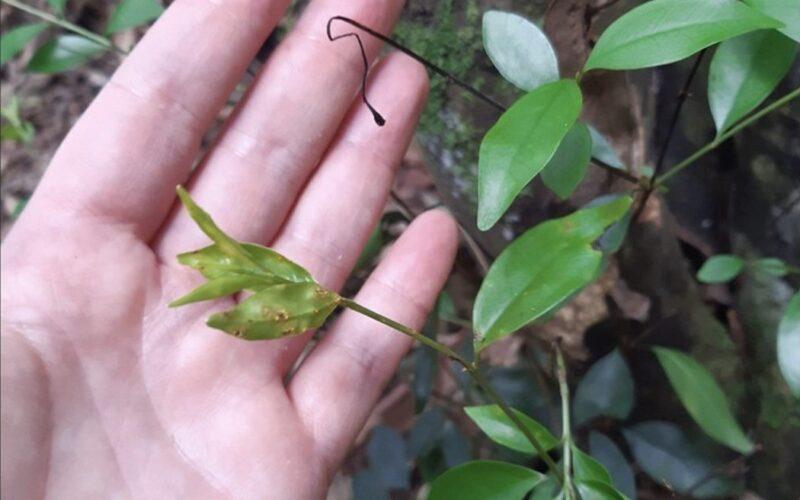
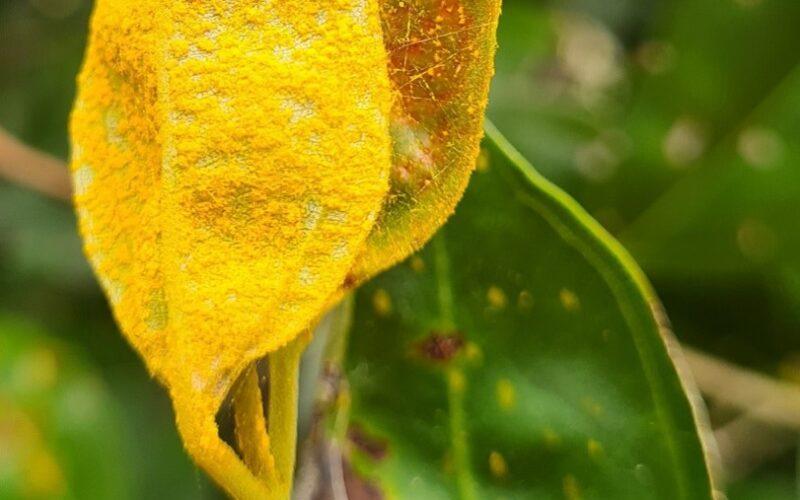
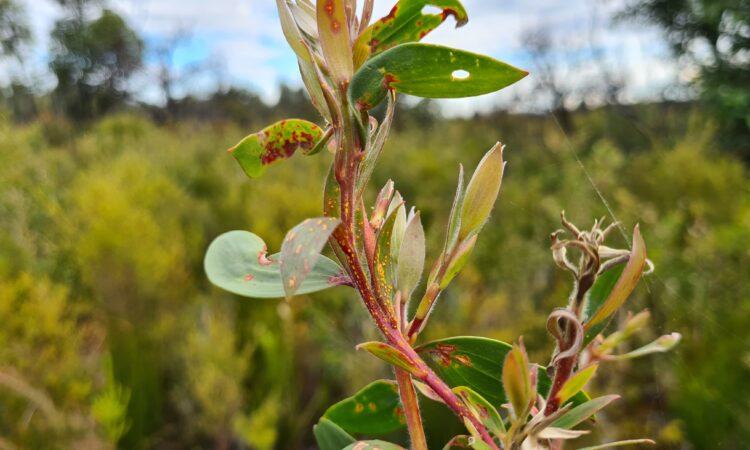
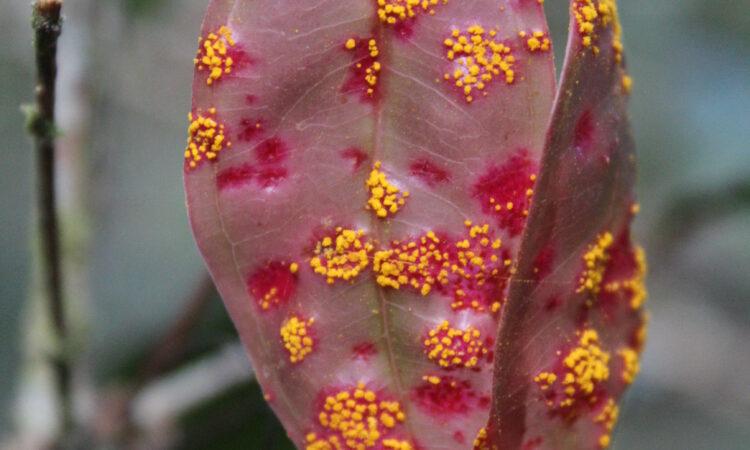
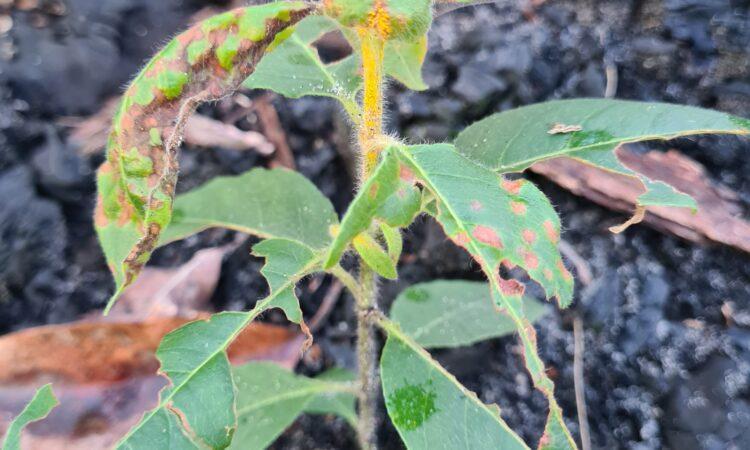
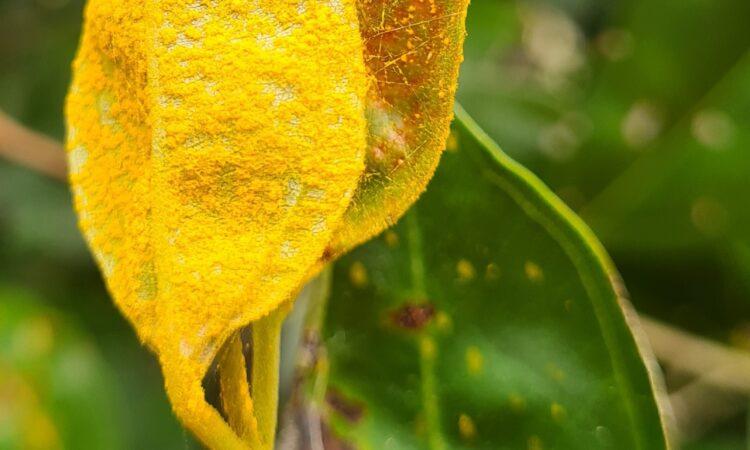
Myrtle rust is caused by the fungal pathogen Austropuccinia psidii and was first detected in Australia in 2010. It has spread quickly since then, with significant impacts for its host plants in the Myrtaceae family – including eucalypt, bottlebrush, paperbark, tea-tree and lilly-pilly species. Several species are now in dramatic decline.
Dr Stevenson talks about her research investigating how the increase in dead trees due to the fungus affects forest structure and potentially raises the risk of severe fires.
Most current research has focused on myrtle rust’s impact on individual plant species. This project is taking a broader ecosystem approach by investigating how myrtle rust affects forest structure, ecological function, species recruitment and long-term resilience.
The project includes 2 separately led but complementary research streams:
Together, these research streams will help identify the forest types, species and ecological communities most vulnerable to myrtle rust, and provide evidence to guide monitoring, conservation planning, restoration and biosecurity management.
This project will also fund additional training programs for Indigenous rangers in myrtle rust monitoring, impact assessment and management strategies.
Key research areas
To address the challenges posed by the spread of myrtle rust and to maintain the ecosystem health of Australian World Heritage forests, this project is:
Pathway to impact
Together, the QUT and JCU research streams will support improved management of myrtle rust impacts by:

Scientific Paper
March 2026 | Open Access
Historical land use couples with host density to affect myrtle rust impacts in a wet sclerophyll forest community in Eastern Australia
Stevenson, K., Carlson, J., McDonald, W., Pegg, G., Wills, J., & Firn, J. (2026). Historical land use couples with host density to affect myrtle rust impacts in a wet sclerophyll forest community in Eastern Australia. Ecological Solutions and Evidence, 7, e70217. https://doi.org/10.1002/2688-8319.70217
Report
November 2024
Resilient Landscapes Hub 2023 Annual Progress Report
Project leader
The project is being led by Professor Jennifer Firn from QUT, Dr Geoff Pegg from the Qld Department of Agriculture and Fisheries and Professor Darren Crayn from James Cook University. This project will contribute to 2 cross-cutting initiatives:
Contact
For further information, contact jennifer.firn@qut.edu.au, geoff.pegg@daf.qld.gov.au, darren.crayn@jcu.edu.au or nesplandscapes@uwa.edu.au.
Research users
People
Research Executive Committee and Key Researcher
Queensland University of Technology
Key Researcher
Qld Department of Agriculture and Fisheries