5 August 2026
New research has found that environmental DNA can strengthen traditional fish monitoring by detecting species that may not be recorded through netting alone.
The study, published in Aquatic Conservation: Marine and Freshwater Ecosystems, compared environmental DNA, or eDNA, with two traditional netting methods across 34 floodplain wetlands in south-eastern Australia.
eDNA detects traces of genetic material that fish leave behind in the water. Researchers compared it with two types of nets – seine and fyke nets – to see which fish each method could detect.
Across the 34 wetlands, the researchers recorded 20 types of freshwater fish. eDNA detected more species at every site and found 10 species that were not caught in the nets. These included threatened Macquarie perch and trout cod, as well as larger fish such as Murray cod and golden perch.
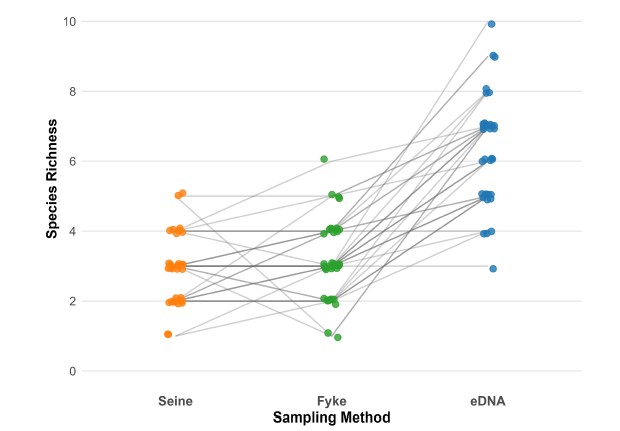
Environmental DNA detected more fish species than seine or fyke netting across the 34 floodplain wetlands surveyed. Source: Lewis et al. (2026) / Aquatic Conservation: Marine and Freshwater Ecosystems.
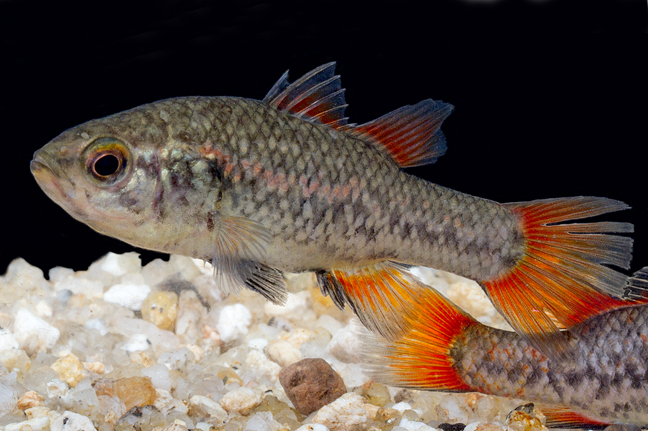
Southern pygmy perch (Nannoperca australis). Image: David Paul / Museums Victoria.
Lead author Samuel Lewis from La Trobe University said the results show how eDNA could strengthen monitoring of fish that are difficult to detect using conventional surveys alone.
“eDNA gives us another way to find fish that can be easily missed by traditional sampling, particularly rare and threatened species that may occur in low numbers,” Mr Lewis said.
The approach could be particularly useful in floodplain wetlands, where dense aquatic vegetation, woody debris and turbid water can make traditional netting difficult.
However, the researchers emphasise that eDNA is not a replacement for traditional fish surveys.
Netting provides information that DNA alone cannot, including the age, size, body condition and sex of individual fish. Because DNA can move through connected waterways, an eDNA detection also does not always mean the fish was living exactly where the water sample was collected. Important or unexpected detections may therefore need to be checked through repeat sampling or traditional methods.
“The real opportunity is in using the methods together. eDNA can give us a broad picture of where species are being detected and help identify priority sites, while traditional sampling gives us the detailed population information needed to understand whether fish populations are recovering or declining,” Mr Lewis said.
The researchers recommend using eDNA first to assess fish diversity, detect threatened species and identify priority wetlands. Traditional sampling can then be targeted to those locations to collect more detailed information about fish populations.
The research contributes to the NESP Resilient Landscapes Hub project Guiding the strategic management of freshwater fish. The project is working with river managers to improve knowledge of freshwater fish distributions, threats and habitat needs, and to inform monitoring, conservation and waterway management.
The National Environmental Science Program Resilient Landscapes Hub is funded by the Australian Government to support research that strengthens the resilience and sustainability of Australia’s terrestrial and freshwater ecosystems.
Want to know more about the Resilient Landscapes Hub's activities and our research into practical solutions to environmental problems? Stay informed about activities, research, publications, events and more through the Hub newsletter.
"*" indicates required fields