4 November 2026
New research has uncovered signs of ancient carbon in aquatic communities living in the Martuwarra Fitzroy River’s waterholes, revealing new insights into how these important dry-season habitats function.
The study, published in Scientific Reports, was led by Dr Thiaggo Tayer from The University of Western Australia, working with fellow UWA researchers and collaborators from the Australian Nuclear Science and Technology Organisation (ANSTO) and the University of Georgia (USA). It examined how carbon moves through four persistent pools and a floodplain spring in Western Australia’s Kimberley region.
Persistent pools, or waterholes, provide vital refuges for fish and other aquatic species when rivers stop flowing during the dry season. Understanding how these pools function is increasingly important as climate change and growing demand for water place pressure on freshwater ecosystems.
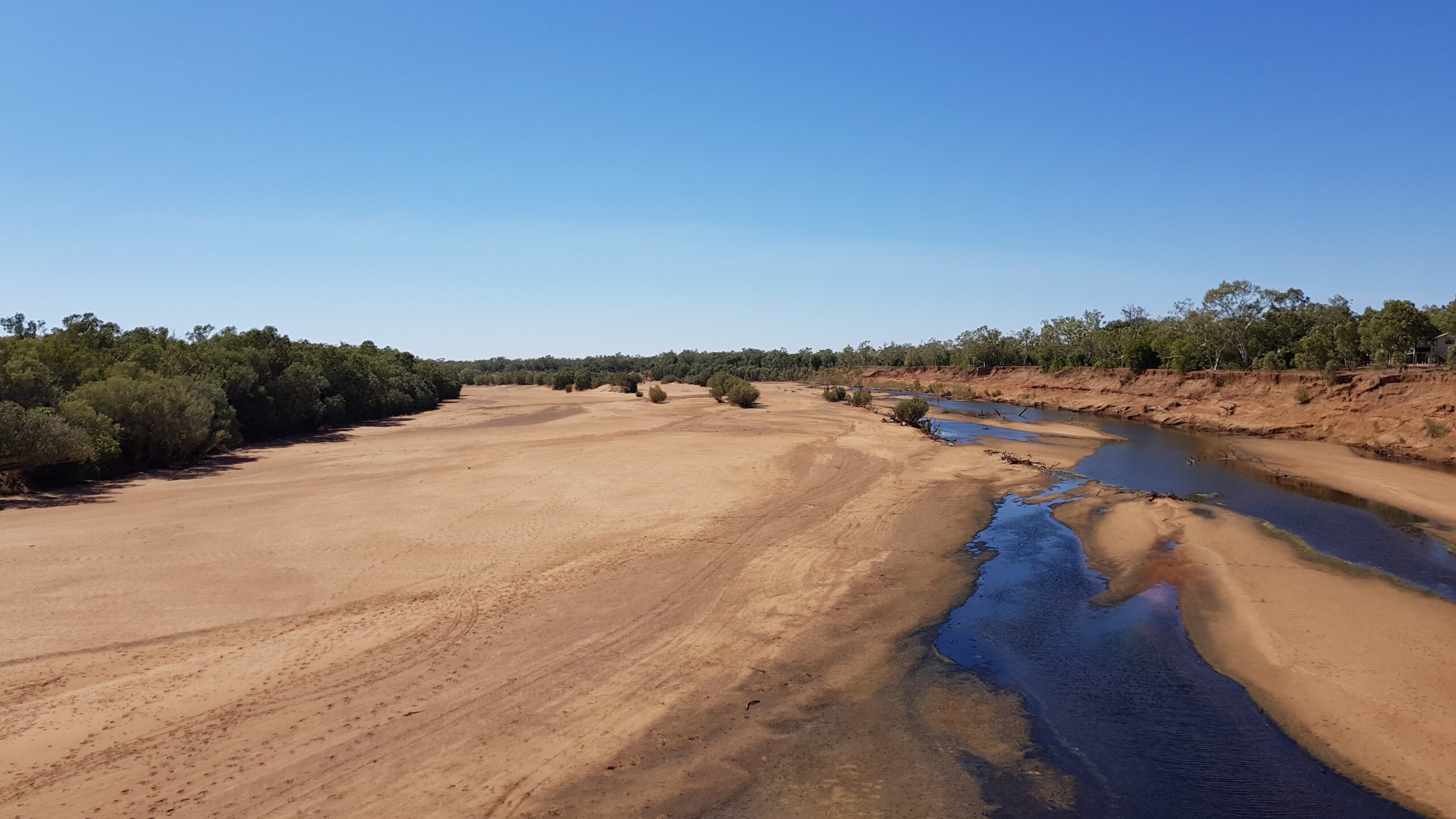
Persistent pools along the Martuwarra Fitzroy River provide important refuges for aquatic species during the dry season. Photo: Thiaggo Tayer.
Researchers collected samples of water, algae, biofilm, aquatic plants and animals over two dry seasons in 2019 and 2020. They used radiocarbon analysis to test whether the age of the carbon dissolved in the water matched the age of the carbon taken up by aquatic life. They also used other chemical tracers to look for signs of groundwater inflow at each pool.
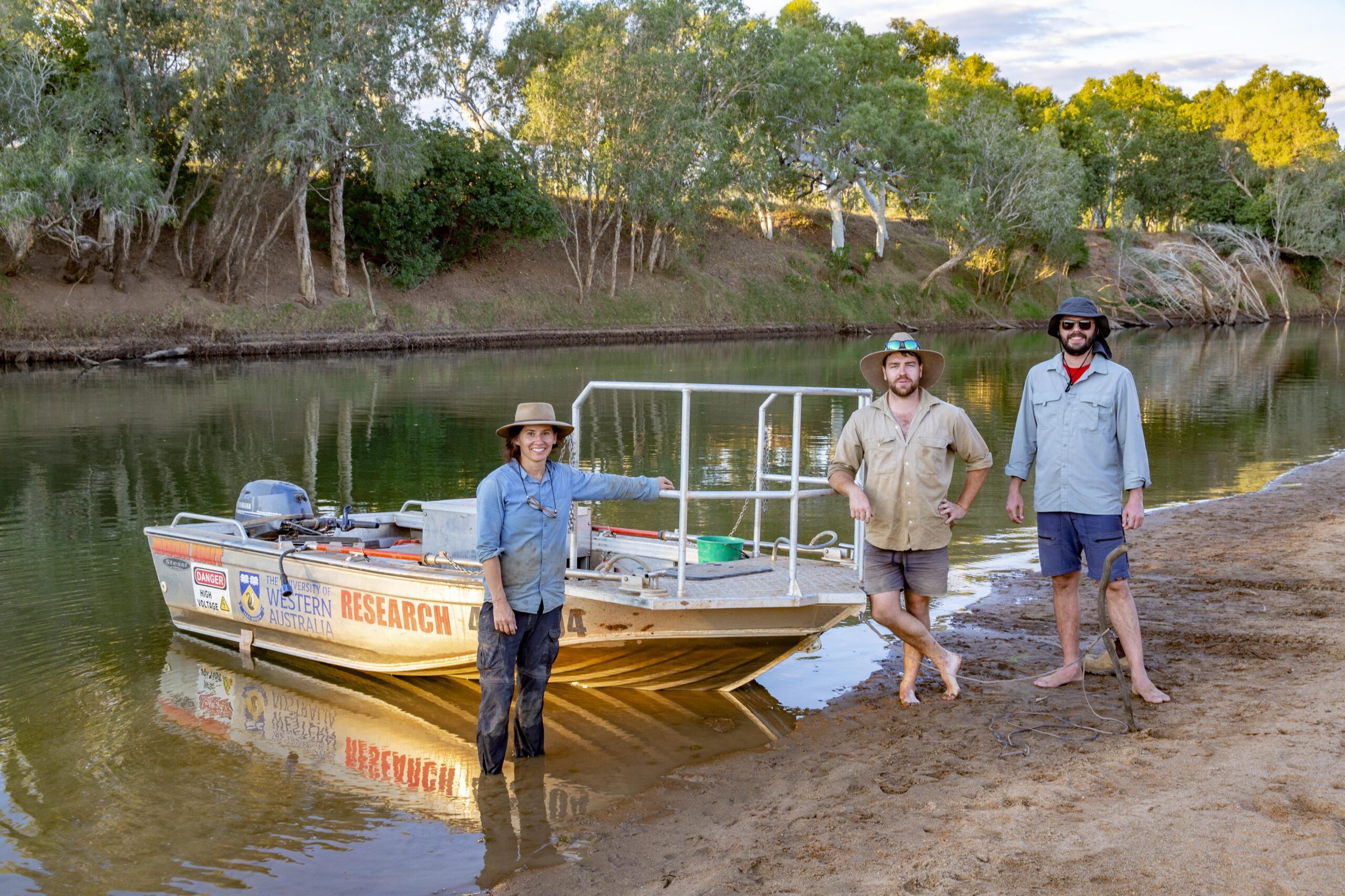
Dr Leah Beesley, Chris Keogh and Dr Thiaggo Tayer preparing to collect water and aquatic life samples at Myroodah Pool on the Martuwarra Fitzroy River. Photo: Michael Douglas.
In the river pools, the carbon dissolved in the water was almost entirely modern. However, communities growing on submerged surfaces carried consistently older carbon signatures in all four pools. These communities included biofilm and periphyton, a mixture of algae and other microorganisms.
In one pool, periphyton had a radiocarbon signature equivalent to an apparent age of around 4,500 years. This does not mean the organisms themselves were that old. It indicates that some of the carbon they took up came from a source that had been isolated from the atmosphere for a very long time.
“If we had only sampled the water, we would have missed almost all of the old carbon in these pools,” Dr Tayer said. “The organisms told a very different story.”
Surprisingly, among the river pools, the strongest old-carbon signature was found in the pool with the least evidence of groundwater inflow. This suggests that groundwater alone is unlikely to explain where the older carbon is coming from.
Other possible sources include old organic matter stored in river sediments, carbon linked to methane and carbon from underlying rocks. Further research is needed to identify the sources of this older carbon.
The researchers also found that fish, aquatic insects and snails in the river pools contained mostly modern carbon, suggesting that the older carbon detected in attached aquatic communities was not clearly reflected further up the food chain.
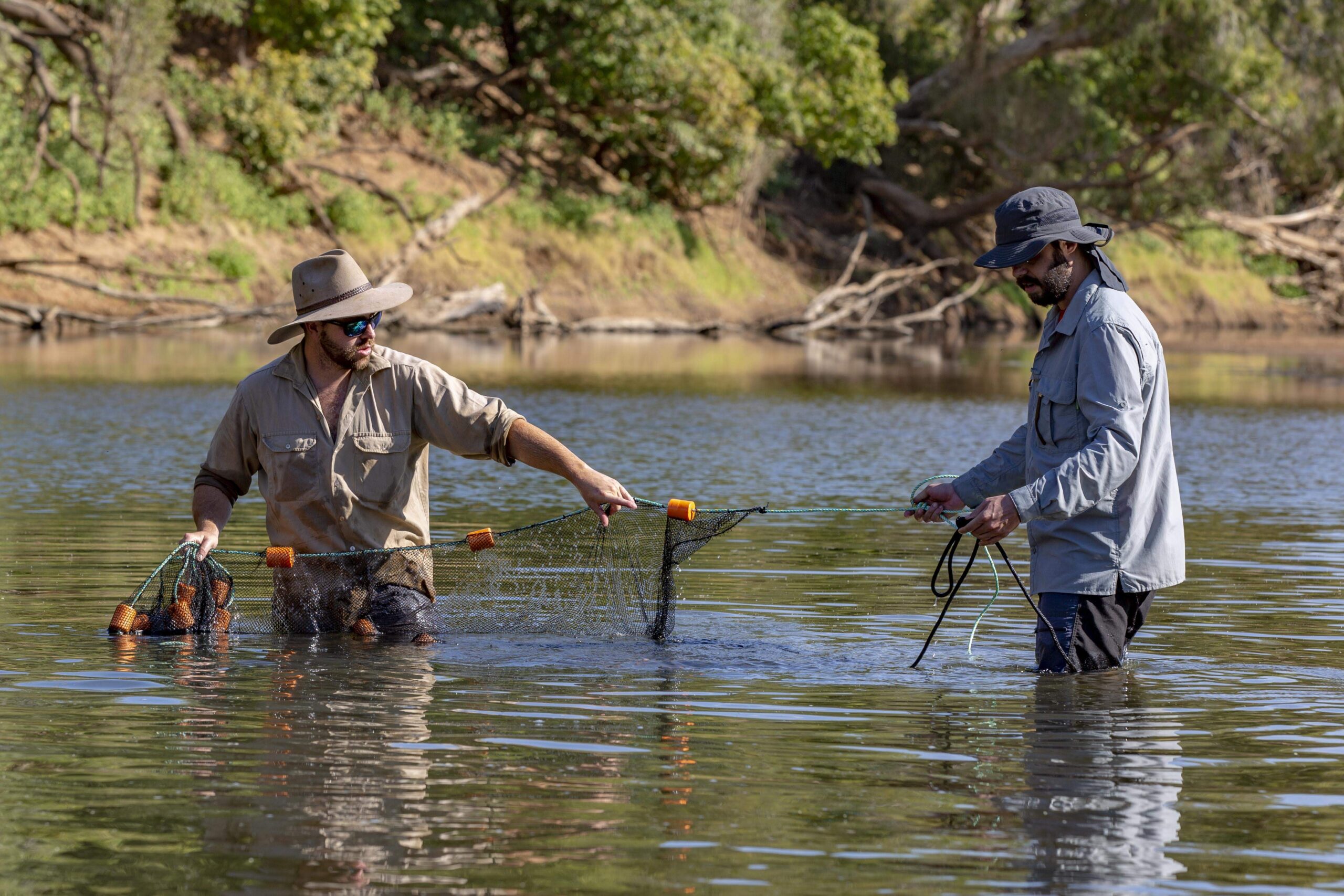
Chris Keogh and Dr Thiaggo Tayer using a seine net to collect fish samples from the Martuwarra Fitzroy River. Photo: Michael Douglas.
However, at a nearby groundwater-fed spring, older carbon signatures were detected in aquatic plants, insects and fish. Here, the inorganic carbon dissolved in the spring water was even older, so again the water did not match the organisms living in it. This suggests that carbon can move through freshwater ecosystems in different ways, depending on local conditions.
The findings highlight the importance of looking beyond water chemistry by sampling the organisms themselves when assessing and protecting persistent pools. They also show the need for further research into how carbon moves through these ecosystems and how changes in water availability may affect their ecological function.
The research complements the NESP Resilient Landscapes Hub’s Mapping and monitoring persistent pools using remote sensing to support river resilience project, which is developing satellite-based tools to monitor waterholes and support water management, climate adaptation and conservation planning.
The National Environmental Science Program Resilient Landscapes Hub is funded by the Australian Government to support research that strengthens the resilience and sustainability of Australia’s terrestrial and freshwater ecosystems.
Want to know more about the Resilient Landscapes Hub's activities and our research into practical solutions to environmental problems? Stay informed about activities, research, publications, events and more through the Hub newsletter.
"*" indicates required fields