Karen Gibb
Charles Darwin University
Keywords: finches, Gouldian Finch, Gouldian Finches, threatened species, terrestrial monitoring, waterholes, dry season, wet season, management, EPBC, IUCN, high cultural value, logsitcal challenges, Top End, NT, northern Territory, Northern Territory Government, environmental DNA, eDNA, e-DNA, e DNA, environmental assessments, logistically challenging, CDU, RIEL, Charles Darwin University
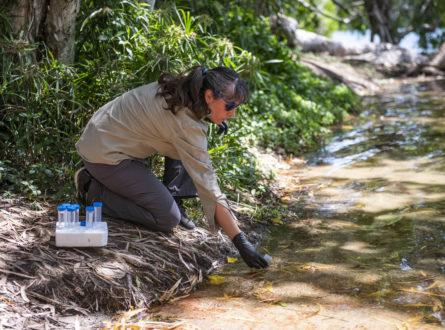
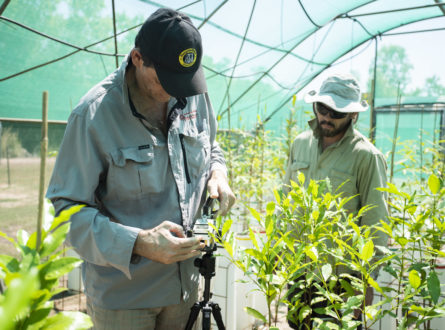

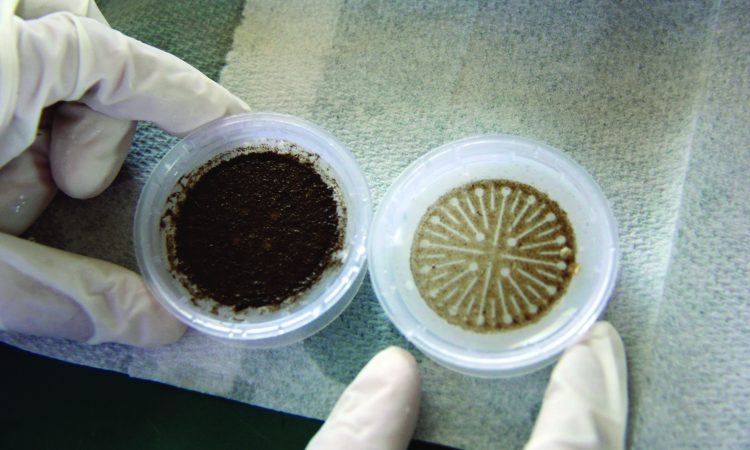
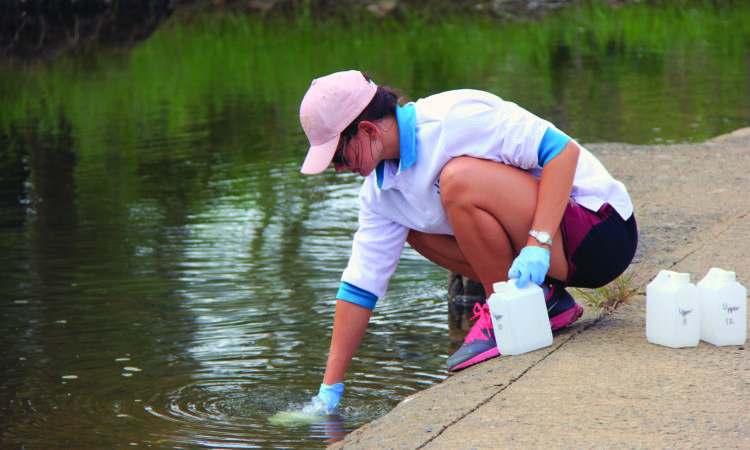
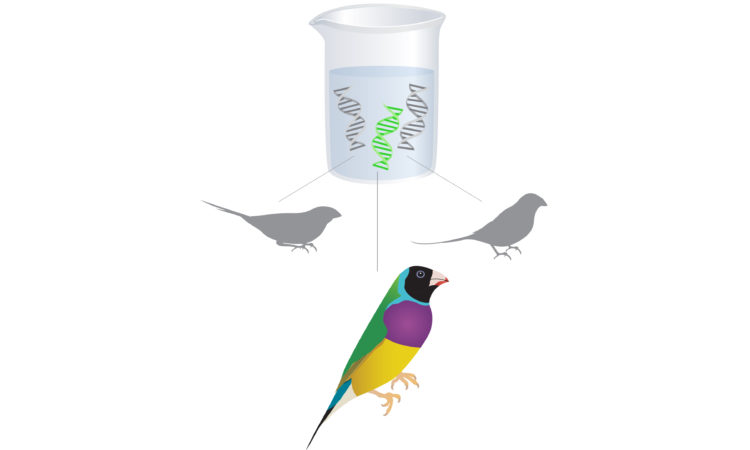
Animals leave DNA traces of their presence in hair, skin, urine, faeces, sperm and eggs that are shed into their surrounding environment. This DNA can be found in the environment for a short time even after visible traces have disappeared, and is called eDNA.
This project showed, for the first time, that eDNA can be used to detect the presence of an endangered bird species simply by collecting a cupful of water from the pools where they drink.
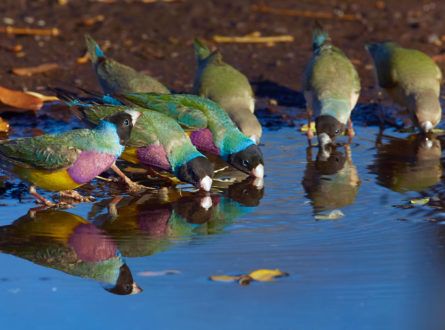
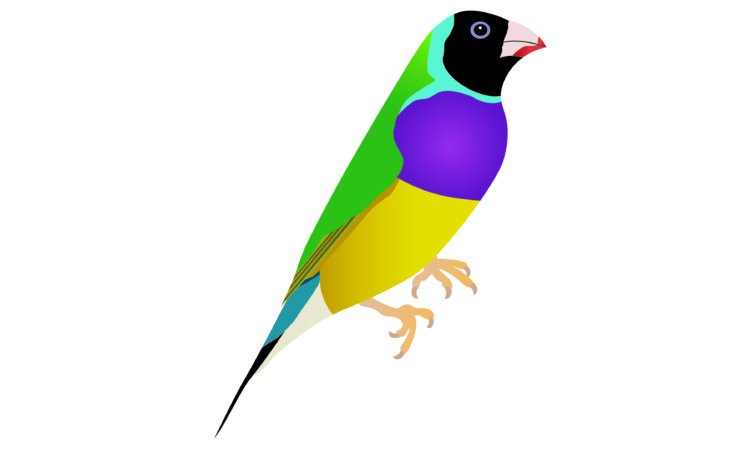
The research developed a genetic probe that targets and identifies eDNA of the endangered Gouldian finch (Erythrura gouldiae), a rainbow-coloured grassfinch endemic to the savanna woodlands of northern Australia.
Gouldian finches live in small and mobile groups, making them difficult to find using standard survey methods. This new eDNA test for Gouldian finches will help the Northern Territory Government in their regional wildlife surveys.

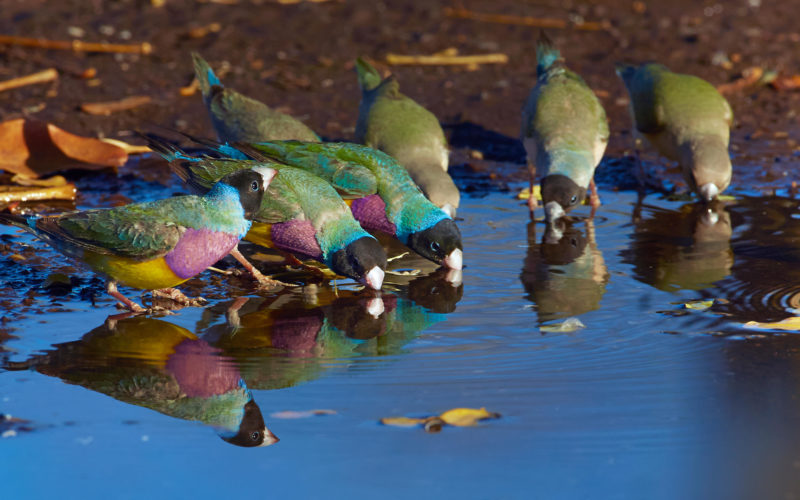
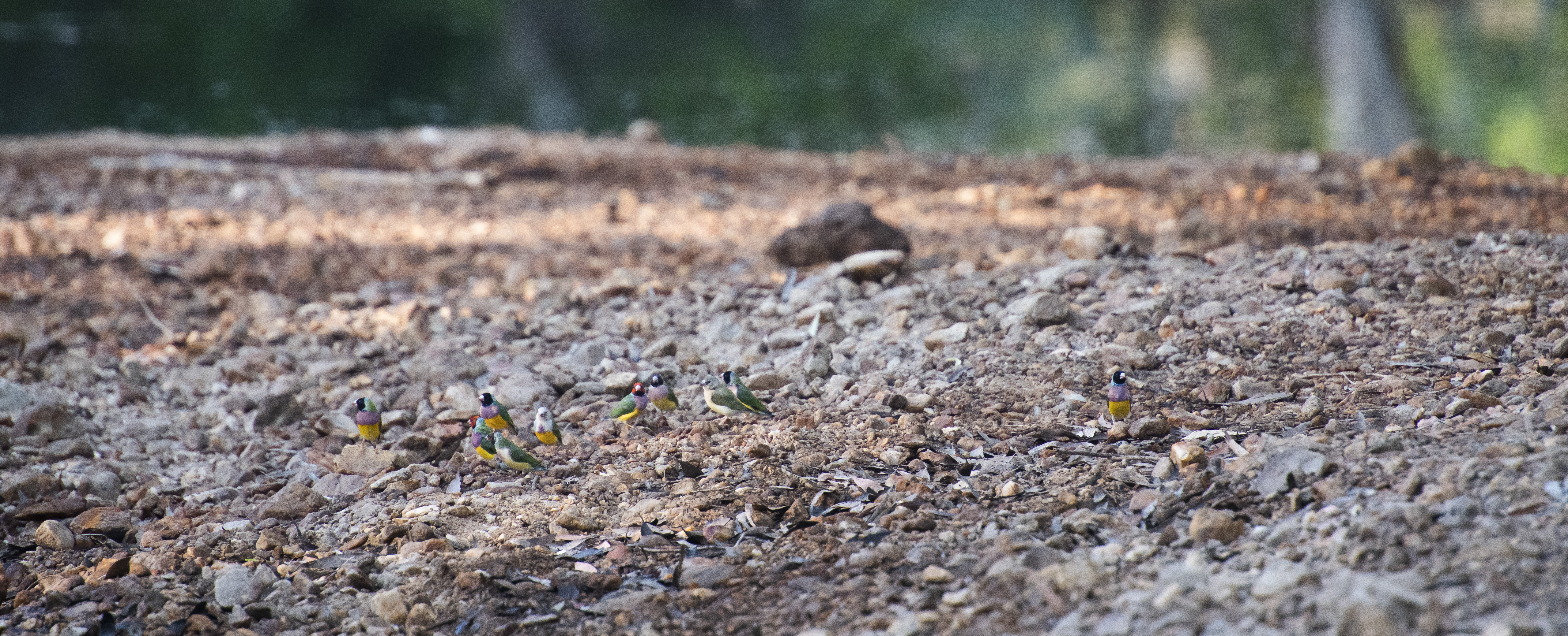

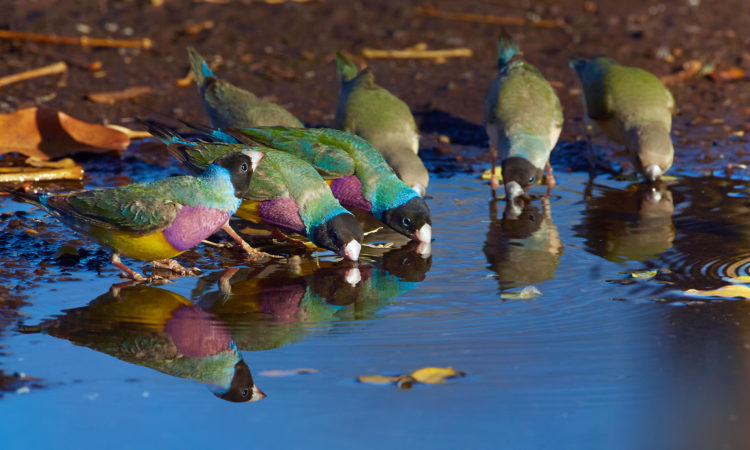
Gouldian finches drinking at a waterhole in the Northern Territory. Photo: NESP Northern Australia Hub.



Report
July 2022
Northern Hub Final Report 2021
Northern Australia Environmental Resources Hub. 2021. Northern Australia Environmental Resources Hub Final Report. Charles Darwin University, Darwin.
Impact Storie
March 2022
New approaches for monitoring and communicating about environmental resources (thematic impact story)
Video
August 2021
NESP Northern Hub wrap-up video
Impact Storie
May 2021
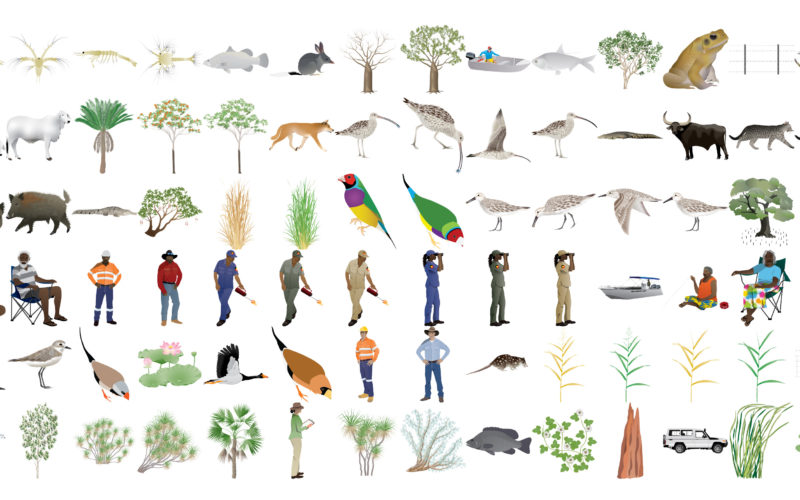
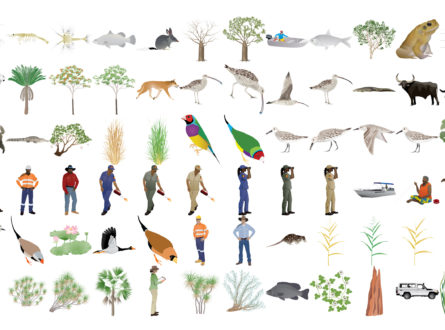
Engagement is a two-way street: Creating symbols for science communication (impact story 2020)
Other
April 2021
eDNA game website
This website describes the eDNA approach and features a game for kids to test their knowledge of Gouldian Finch eDNA. Developed in partnership with Inspired NT.
Other
March 2021
More Than Words (CSIRO Double Helix article Jan 2021)
Impact Storie
July 2020
Finding finches – using eDNA to track endangered birds (impact story)
Report
January 2020
Standard operating procedures for collecting and extracting Gouldian Finch eDNA (report)
Info Sheet
November 2019
Developing eDNA methods to detect Top End animals (project update October 2019)
Scientific Paper
November 2019 | Open Access
Development and validation of an environmental DNA test for the endangered Gouldian finch (scientific paper)
Day K, Campbell H, Fisher A, Gibb K, Hill B, Rose A & Jarman SN. (2019). Development and validation of an environmental DNA test for the endangered Gouldian finch. Endangered Species Research 40:171-182. https://doi.org/10.3354/esr00987
Video
January 2019
Terrestrial eDNA project update (Nov 2018)
Info Sheet
August 2018
Developing eDNA methods to detect Top End animals (start-up factsheet)
Other
May 2017
Top End research overview (brochure Jun 2018)
This project was led by Professor Karen Gibb from Charles Darwin University and Dr Alaric Fisher from the Northern Territory Department of Environment, Parks and Water Security.
Professor Simon Jarman (The University of Western Australia) led the bioinformatics and initial probe design.
Professor Gibb and Dr Fisher were being assisted by researchers from Charles Darwin University and the NT Department of Environment, Parks and Water Security.
This project was completed in December 2021.
Contact
Karen Gibb, Charles Darwin University, karen.gibb@cdu.edu.au
Alaric Fisher, Northern Territory Government, alaric.fisher@nt.gov.au



Charles Darwin University
Northern Territory DEPWS
Charles Darwin University
DEPWS (Northern Territory Government)