
24 September 2025
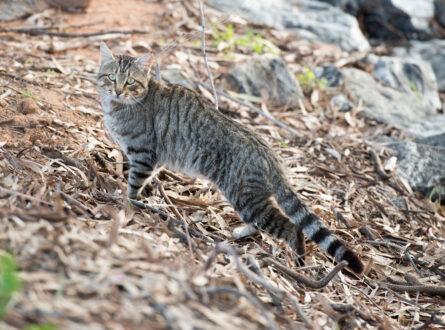
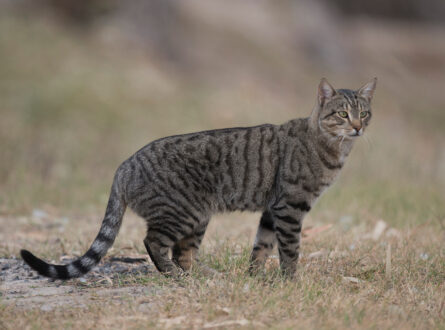
Researchers testing innovative technology to control feral cats and foxes in the south-west of Western Australia have attached global positioning system (GPS) collars on eight feral cats in the Bremer–Pallinup coastal reserve, to monitor their real-time movement.
The tracking devices will enable National Environmental Science Program (NESP) Resilient Landscapes Hub project researchers to identify areas frequently used by introduced predators and test predator interactions with the control device called the Felixer™.
The Fitz-Stirling bioregion (from the Fitzgerald River National Park to the Stirling Range National Park) is part of one of only two globally recognised biodiversity hotspots in Australia. It is also one of Australia’s 20 Priority Places under the Threatened Species Commissioner’s Saving Native Species program.
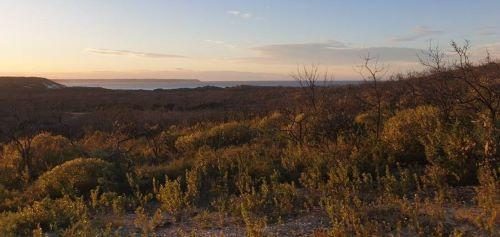
Fitz-Stirling coastal corridor study area. Photo: Luke Emerson
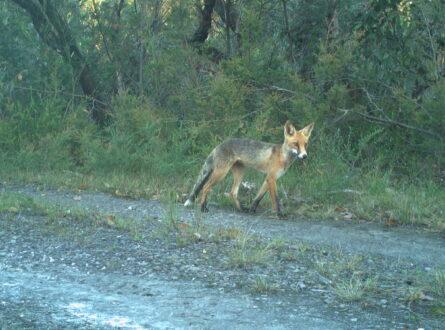
In high-value conservation areas like this, introduced predators pose a serious threat to native wildlife already vulnerable to habitat loss, altered fire regimes and climate change. European red foxes also pose significant economic threats to the livestock industry, particularly through predation on lambs.
Conventional control methods, including baiting, trapping, and shooting, are routinely used to manage feral cats and foxes. However, each method differs in its cost, labour intensity, and effectiveness, and may vary in suitability for different predator species or habitats.
The Felixer™ grooming device is an automated unit that uses artificial intelligence to identify cats and foxes and then sprays a lethal dose of 1080 gel onto these target species, which is then ingested during grooming. Researchers are investigating the usefulness of Felixer™ alongside conventional control methods for feral cats and foxes.
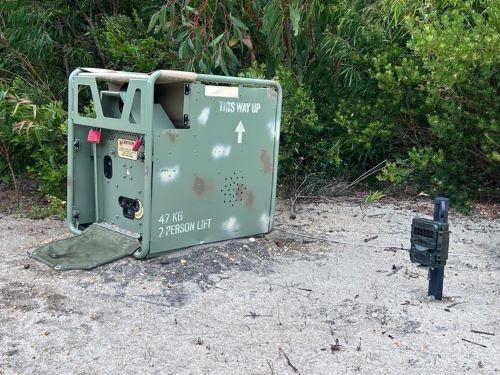
Felixer™ grooming device to control feral cats and European red foxes. Photo: Sarah Comer
Western Australian Department of Biodiversity, Conservation and Attractions (DBCA) Regional Ecologist Dr Sarah Comer said the collaborative NESP project is an opportunity to understand how new tools to manage feral cats and foxes can be best used in important biodiversity regions such as the Fitz-Stirling.
“The Western Australian Department of Biodiversity, Conservation and Attractions has been working for over 20 years to deliver landscape-scale, integrated management of introduced predators and this project will improve our collective efforts to protect biodiversity,” Dr Comer said.
Before widespread adoption of the Felixer™, however, rigorous field-based evidence is required to evaluate the device’s effectiveness across a range of habitat types and environmental contexts.
Bush Heritage Australia Ecologist Dr Genevieve Hayes said it’s worth highlighting that this tool has proved valuable in other regions.
“In the arid areas of South Australia and New South Wales, field trials have demonstrated good success in removing cats, as well as targeting individuals that were difficult to remove through traditional methods (Moseby et al.,2020)(Pedler et al., 2024),” Dr Hayes said.
Three new Felixer™ units have been deployed in the Fitz-Stirling coastal corridor in areas of high predator activity. The information collected from these units will be combined with information from five Felixers™ that have been in operation in the Fitz-Stirling for the past two years. The researchers aim to evaluate how effective the devices are at targeting cats and foxes, including those with GPS collars. Further fieldwork is planned across the Fitz-Stirling bioregion later in 2025.
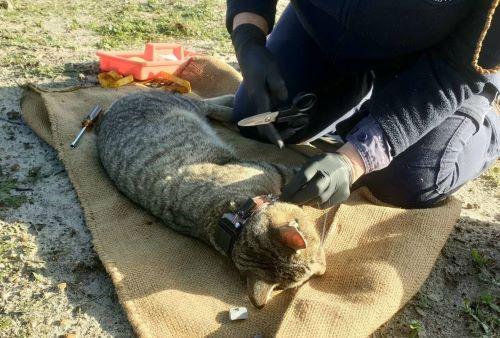
A sedated feral cat being fit with a GPS collar. Photo: Luke Emerson
The project is also building local capacity, through collaboration with Aboriginal Ranger teams and private landholders, and strengthening community engagement in long-term introduced predator management efforts.
Binalup and Southern Aboriginal Corporation Rangers have supported the first round of collaring and researchers are currently working with a range of different Indigenous groups from throughout the region to support further research activities.
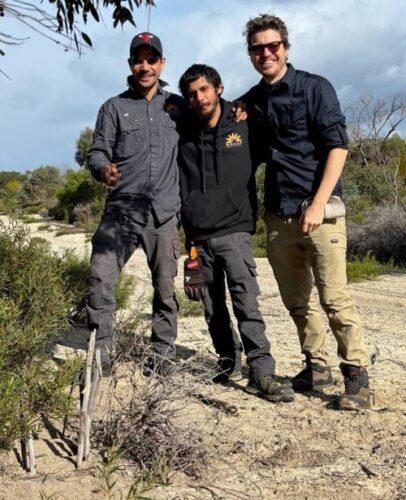
(L-R) Rangers from Binalup Aboriginal Corporation Ranger Program, Nicko Garlett and Jason Bolton , with NESP Resilient Landscapes Hub Researcher Luke Emerson from the University of Newcastle standing behind a soft-jaw trap that has been set. Photo: Sarah Comer
The findings will inform both local and national efforts to reduce the impact of introduced predators on Australia’s native wildlife and sheep industry.
The collaborative project is funded by the Australian Government through the NESP Resilient Landscapes Hub with project partners and supporters including the University of Newcastle, DBCA, the Western Australian Department of Primary Industries and Regional Development, Bush Heritage Australia, South Coast Natural Resource Management, and the Wagyl Kaip Southern Noongar Aboriginal Corporation.
South Coast NRM and its regional conservation partners are also coordinating Integrated Pest Control throughout the Priority Place at the landscape scale.
This includes convening a biannual Integrated Pest Control steering committee of which NESP is a participating member.
Want to know more about the Resilient Landscapes Hub's activities and our research into practical solutions to environmental problems? Stay informed about activities, research, publications, events and more through the Hub newsletter.
"*" indicates required fields