26 November 2025
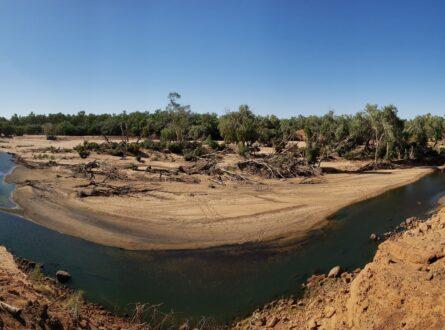
New research has revealed the critical role of river-floodplain connectivity in sustaining fish species diversity on the floodplain of the Martuwarra Fitzroy River in the Kimberley region of Western Australia.
The study published in the journal Ecological Applications found that pools on the river’s floodplain which connected to the river during the wet season contained more species of fish, especially pools that connected for longer. Pools that held water through the previous dry season also supported twice as many species as those that dried out.
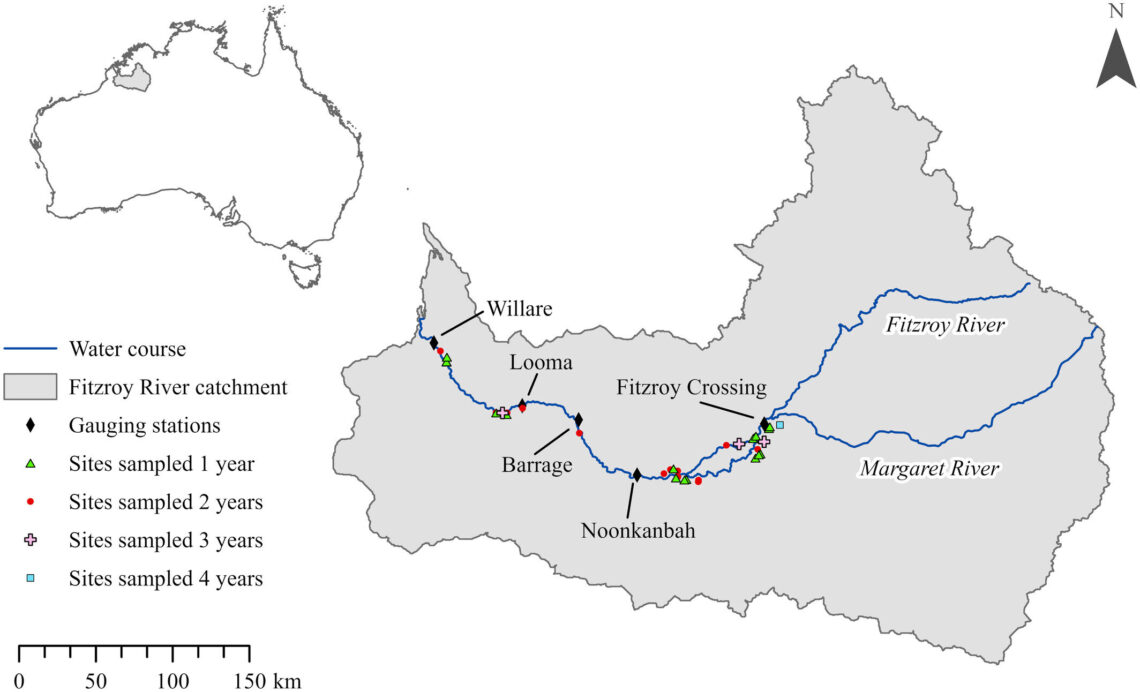
Location and frequency of sites (floodplain pools) sampled and gauging stations (diamonds, labeled) in the Fitzroy River, Kimberley, Western Australia. Credit: Ecological Applications (2025). DOI: 10.1002/eap.70155
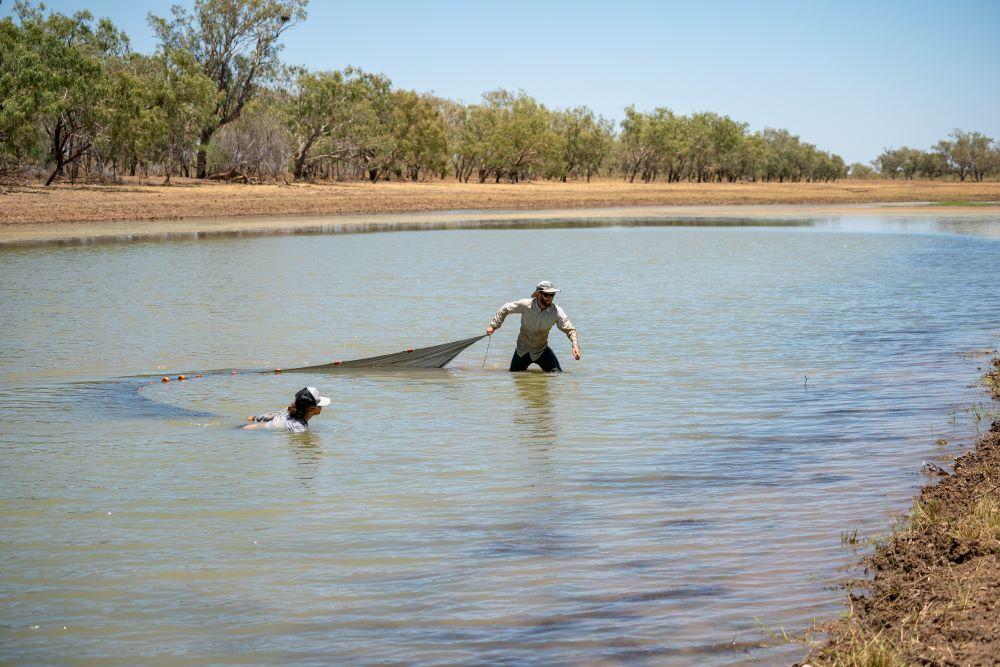
NESP Resilient Landscapes Hub researchers Dr Oliver Pratt and Dr Leah Beesley seine netting a floodplain pool which gives insights into the fish communities of the Martuwarra Fitzroy River. (Photo by Michael Douglas, NESP Resilient Landscapes)
Lead author on the National Environmental Science Program (NESP) Resilient Landscapes Hub project, Research Associate Oliver Pratt from The University of Western Australia, emphasised that understanding how both wet and dry-season hydrology shape fish communities was vital to preserving floodplain diversity.
“Understanding the mechanisms that support floodplain biodiversity is essential for maintaining a healthy and resilient river system,” Dr Pratt said.
“In the Martuwarra Fitzroy River, we’re starting to understand the contribution that shallow floodplain pools make to the wider riverine ecosystem, however these habitats are particularly vulnerable to the growing pressures of climate change and water resource development.”
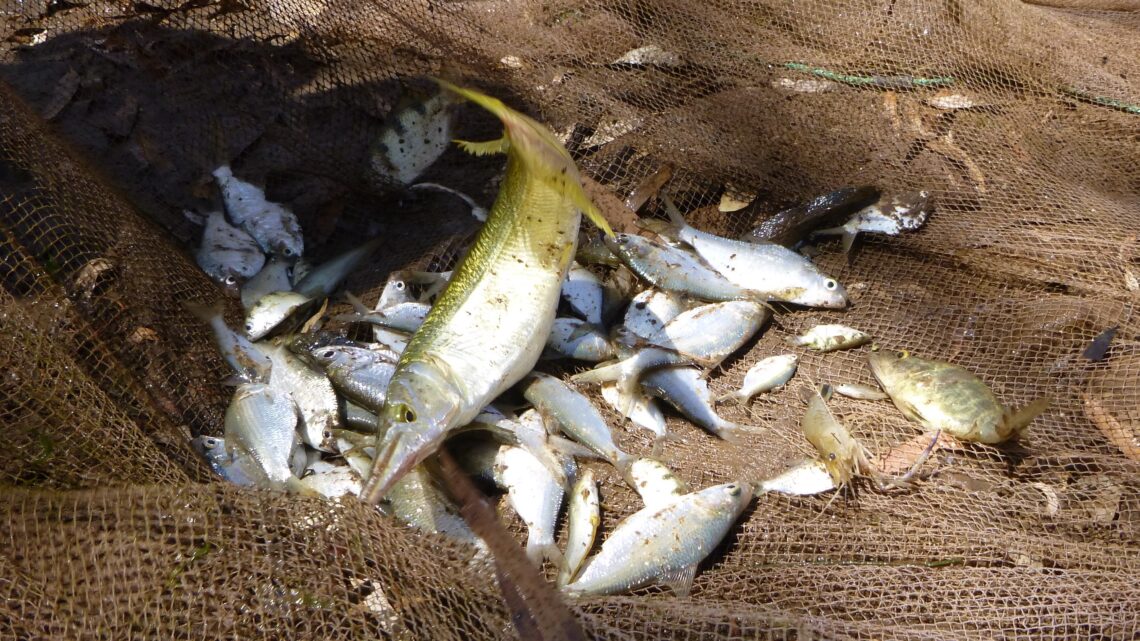
Seine net sampling reveals fish inhabiting a floodplain pool. (Photo by Leah Beesley, NESP Resilient Landscapes)
The research is part of a larger program of work by the NESP Resilient Landscapes Hub looking to model the effects of climate change on vulnerable pools to inform conservation strategies.
“The next stage of the fish study will be to look at how floodplain pools function as fish nurseries and we will be working with Traditional Owners to understand what it means to the Indigenous fish harvest and the river if the pools shrink and the number of fish decline,” Dr Pratt said.
The findings highlight the importance of careful water management to protect the Martuwarra Fitzroy River, one of northern Australia’s last free-flowing rivers.
Want to know more about the Resilient Landscapes Hub's activities and our research into practical solutions to environmental problems? Stay informed about activities, research, publications, events and more through the Hub newsletter.
"*" indicates required fields