Lindsay Hutley
Key Researcher
Charles Darwin University

Project start date: 01/04/2024
Project end date: 30/06/2027
NESP funding: $769,924 (GST-exclusive)
Australia’s deserts have some of the world’s most variable rainfall patterns, and climate change is likely to make them even more spatially and temporally inconsistent. Because of this uncertainty, consistent sources of water are vital refuges in arid environments.
Groundwater-dependent ecosystems are supported by water on or near the surface which is supplied by groundwater systems. They provide critical habitat and support biodiversity in otherwise dry areas and are often areas of cultural importance for Traditional Owners.
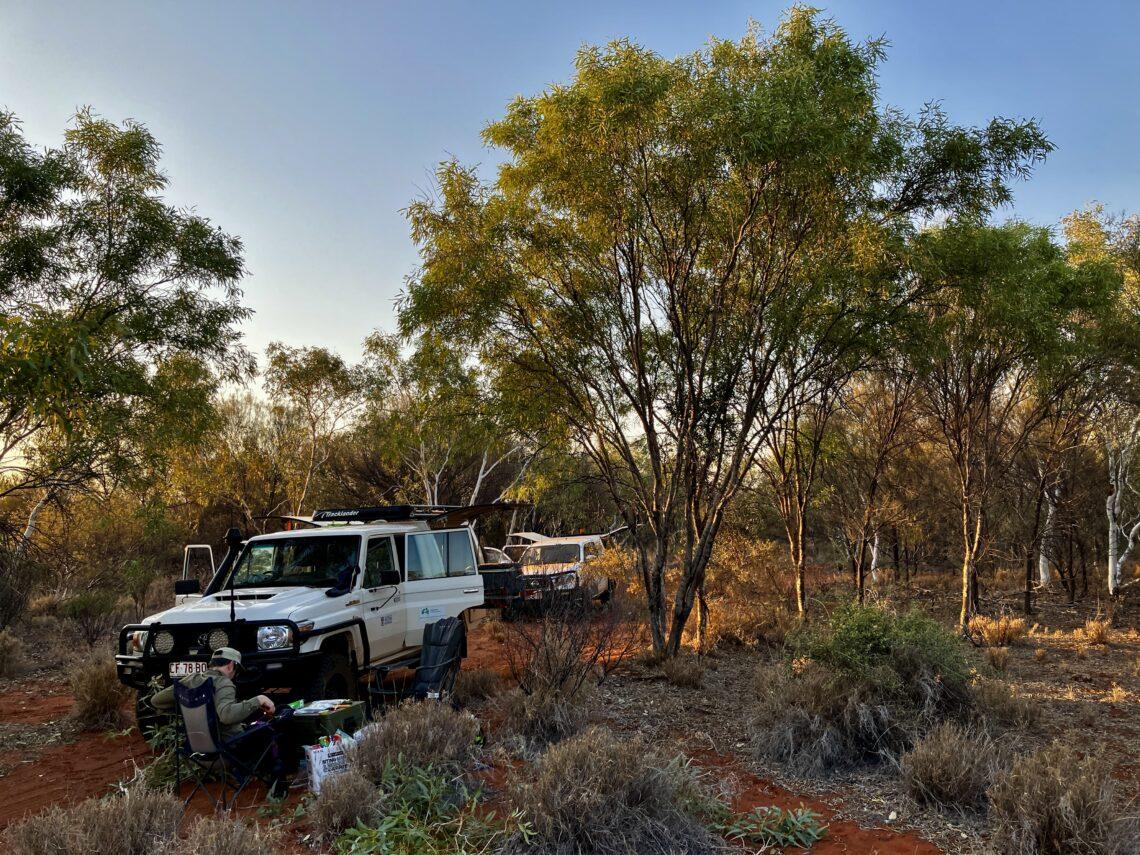
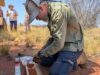
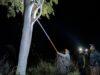
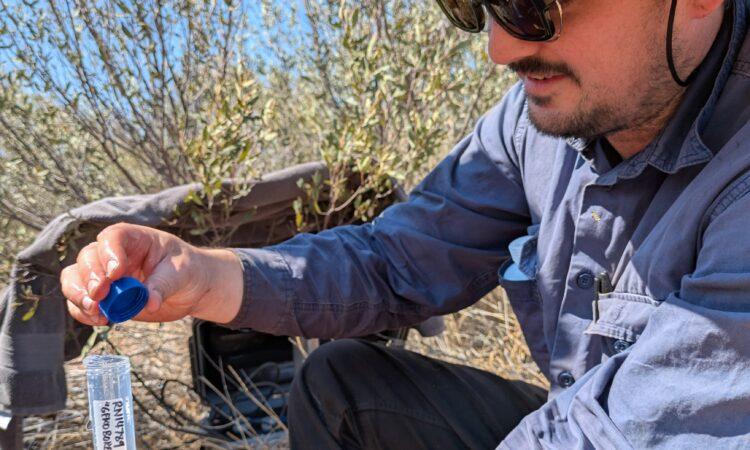
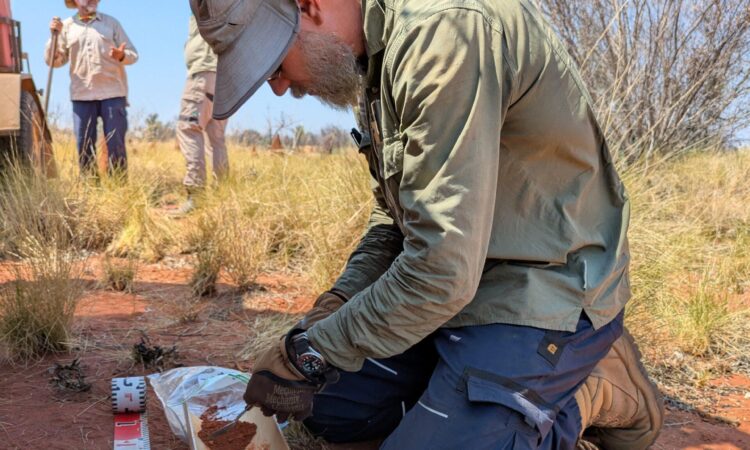
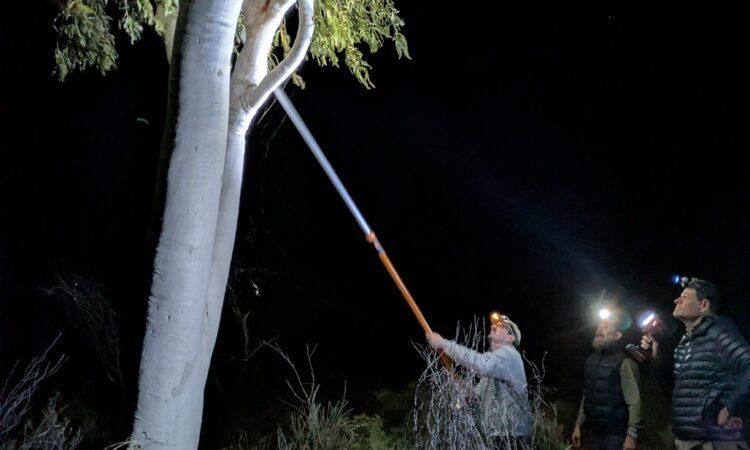
Sampling likely ground-water dependant tree species in the Western Davenport region. Isotopic analysis of groundwater, soil water and plant water from culturally important species will help us understand any reliance on groundwater. Photo: Lindsay Hutley, CDU.
Increased investment in agriculture and other developments which place high demands on water resources in semi-arid and arid zones could potentially place groundwater-dependent ecosystems at risk, if they’re inappropriately managed. It is vitally important that water management practices across Australia’s arid areas are informed by an in-depth understanding of the ecology, hydrology and socio-cultural values associated with these ecosystems and the potential risks from water extraction.
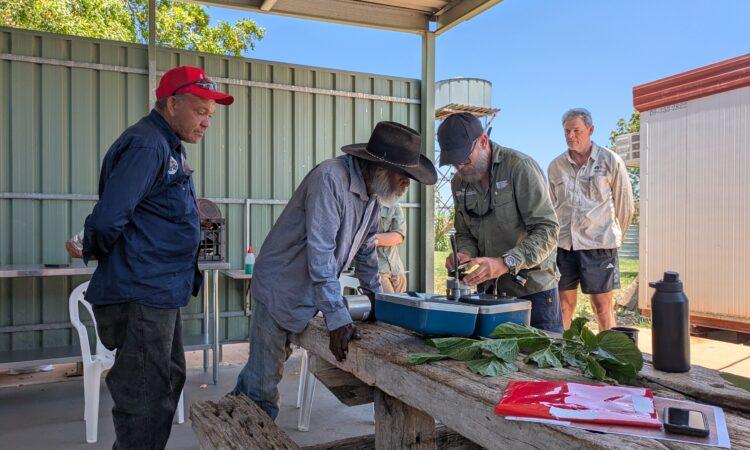
This project brings together Indigenous knowledge, remotely sensed data, hydrogeological information and ecological field surveys to improve detection, understanding and management of groundwater-dependent ecosystems across the arid zones of central Australia. The research consists of two interconnected components that combine biophysical science with a collaborative co-design approach to support improved monitoring and management of groundwater-dependent ecosystems.
We are helping to assess the risks of water extraction on flora, fauna and socio-cultural values, and monitoring changes in their extent and condition.
Key research areas
To help inform the sustainable management of groundwater-dependent ecosystems, this project is:
Pathway to impact
This project will support better protection of arid-zone groundwater-dependent ecosystems by:
Project leader
The project is being led by Professor Lindsay Hutley from Charles Darwin University.
The Traditional Owner and Ranger knowledge, values and monitoring component is led by Rebecca Dobbs from UWA.
Contact
For further information, contact lindsay.hutley@cdu.edu.au rebecca.dobbs@uwa.edu.au or nesplandscapes@uwa.edu.au.
Research users
People
Research Executive Committee and Western Node Leader
The University of Western Australia
Data Wrangler
The University of Western Australia