Samantha Setterfield
Research Executive Committee and Western Node Leader
The University of Western Australia
Project start date: 01/03/2023
Project end date: 31/12/2026
NESP funding: $800,000 (GST-exclusive)
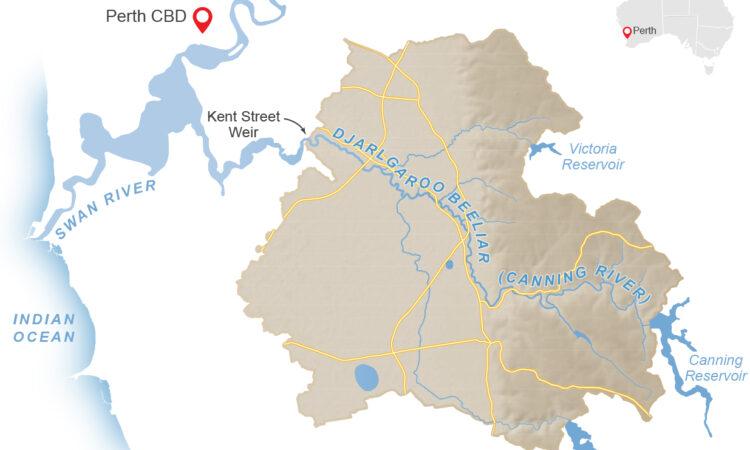
Creating resilient urban rivers that protect biodiversity requires strategic landscape-level prioritisation, targeted on-ground actions and appropriate monitoring of future outcomes. This project seeks to achieve this using the Djarlgarro Beeliar (Canning River, Western Australia) as a case study. It will build on research from the first phase of the National Environmental Science Program and work collaboratively with key stakeholders, including Whadjuk Noongar Traditional Owners, to help implement and evaluate the Australian Government’s Urban Rivers and Catchments Program.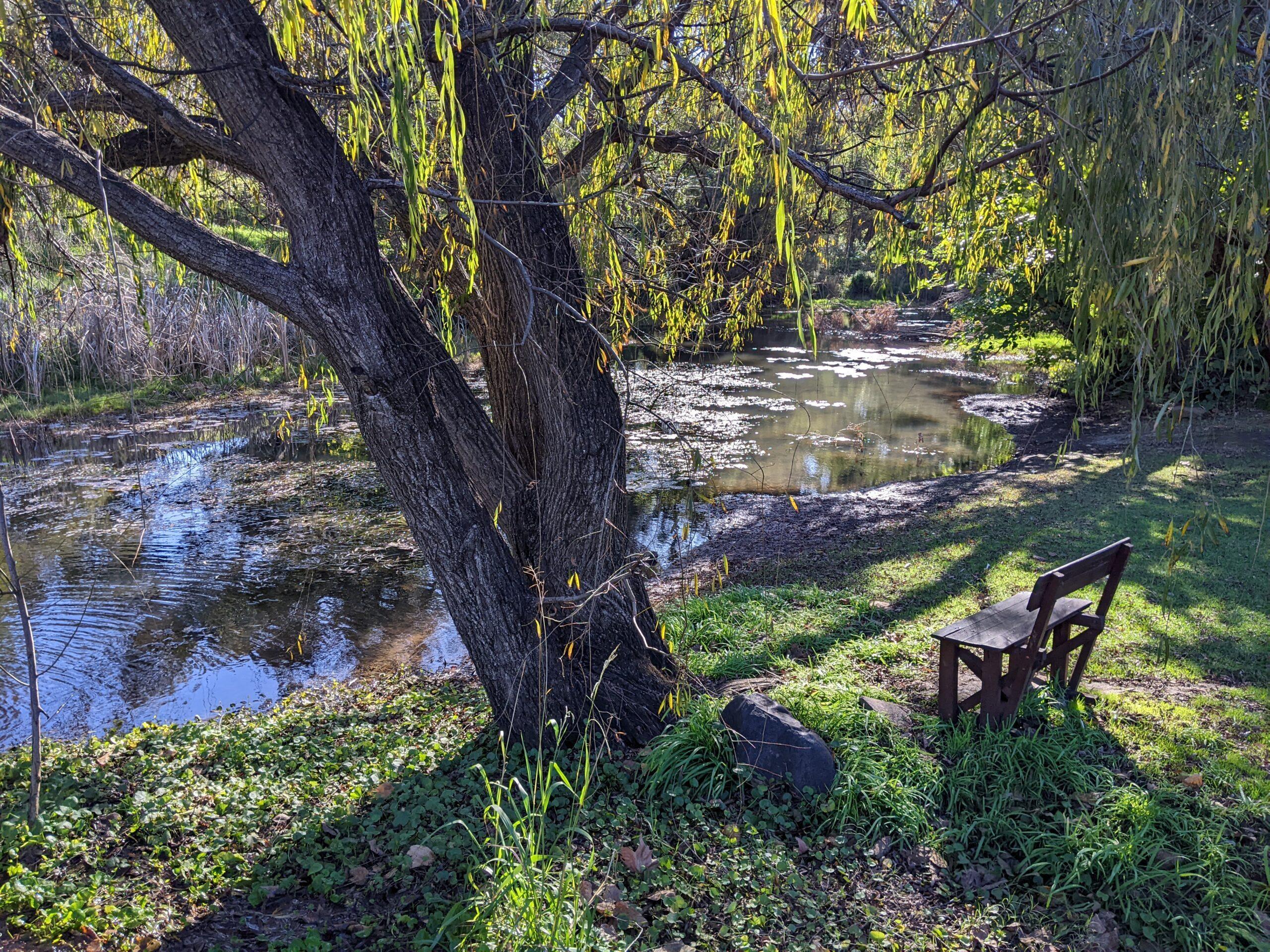
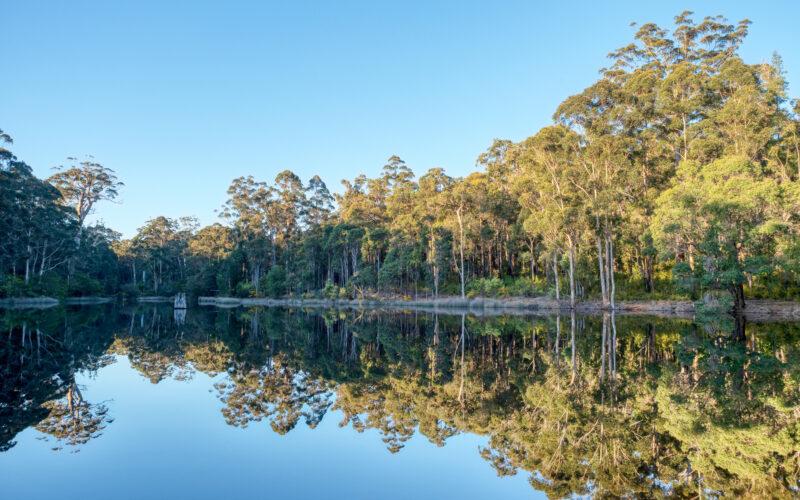
The Canning River is an urban river. Photo: Caroline Canham.
In urban spaces, restoration efforts targeted towards freshwater systems largely rely on short-term grants that are directed toward revegetation. The local government agencies and natural resource management (NRM) and community groups that do this work are limited by jurisdictional boundaries and aren’t funded to determine which areas to prioritise for restoration at a landscape scale. These groups are also not resourced to evaluate the success or failure of previous restoration activities, limiting capacity to learn and improve. Landscape-scale knowledge combined with an assessment of previous restoration efforts is needed to know which sites should be prioritised and which actions taken to maximise return on investment. Information gathered can also be used to identify appropriate indicators to guide future monitoring.
This project will inform the implementation and evaluation of restoration work, including the $10 million committed by the Australian Government towards the ecological repair of sites along the Djarlgarro Beeliar. We’ll provide maps and decision-support tools to guide where to protect, where to restore, what best to do at each site and how to monitor to evaluate success. Our case study on the Djarlgarro Beeliar will provide outcomes useful to urban-restoration activities more broadly, including the Australian Government’s Urban Rivers and Catchments Program.
Key research areas
To address these challenges and equip restoration groups with information to protect, manage and restore urban rivers, this project is:
Pathway to impact
This project will support healthier urban rivers by:
Info Sheet
March 2026
Monitoring and evaluating ecological outcomes of riparian revegetation: How can we improve if we don’t measure?
Scientific Paper
January 2026
How Can We Improve If We Don’t Measure? Evaluation of Riparian Revegetation Projects Prevented by Lack of Monitoring Data
Freestone, F. L., C. A. Canham, S. A. Setterfield, T. C. Tayer, L. S. Beesley, and M. M. Douglas. 2026. “ How Can We Improve If We Don't Measure? Evaluation of Riparian Revegetation Projects Prevented by Lack of Monitoring Data.” Ecological Management & Restoration 27, no. 1: e70034. https://doi.org/10.1111/emr.70034.
Scientific Paper
December 2024 | Open Access
Fishy Business—Assessing the Efficacy of Active and Passive eDNA to Describe the Fish Assemblage of a River in Southwestern Western Australia to Support Effective Monitoring
Stevens, E.R., Hyde, J., Beesley, L.S., Gwinn, D.C., Thompson, S., Morris, L., Wilson, P.R. and Gleeson, D.B. (2024), Fishy Business—Assessing the Efficacy of Active and Passive eDNA to Describe the Fish Assemblage of a River in Southwestern Western Australia to Support Effective Monitoring. Environmental DNA, 6: e70040. https://doi.org/10.1002/edn3.70040
Report
November 2024
Condition of ecological values of the Canning and Southern-Wungong Rivers
Canham, C, Beesley, L, Freestone, F, Tayer, T. C, Setterfield, S. 2024, Condition of ecological values of the Canning and Southern-Wungong Rivers, Report to the Resilient Landscapes Hub of the Australian Government’s National Environmental Science Program. November 2024.
Report
November 2024
Resilient Landscapes Hub 2023 Annual Progress Report
Scientific Paper
November 2024 | Open Access
Active eDNA Is More Cost-Effective Than Fyke Nets or Passive eDNA Collection When Monitoring the Invasion of an Alien Freshwater Fish
Morris, L., Beesley, L., Stevens, E., Gwinn, D., Hyde, J., Thompson, S., Gleeson, D. and Douglas, M. (2024), Active eDNA Is More Cost-Effective Than Fyke Nets or Passive eDNA Collection When Monitoring the Invasion of an Alien Freshwater Fish. Environmental DNA, 6: e70010. https://doi.org/10.1002/edn3.70010
Info Sheet
September 2023
Enhancing the resilience of urban rivers (project information sheet)
Report
June 2023
Resilient Landscapes Hub 2022 Annual Progress Report
Project leaders
The project is being led by Professor Samantha Setterfield and Professor David Pannell from The University of Western Australia.
Contact
For further information, contact samantha.setterfield@uwa.edu.au, david.pannell@uwa.edu.au or nesplandscapes@uwa.edu.au.
Research users
People
Research Executive Committee and Western Node Leader
The University of Western Australia
Deputy Hub Leader and Senior Indigenous Facilitator
Curtin University
Hub Leader
The University of Western Australia
Data Wrangler
The University of Western Australia